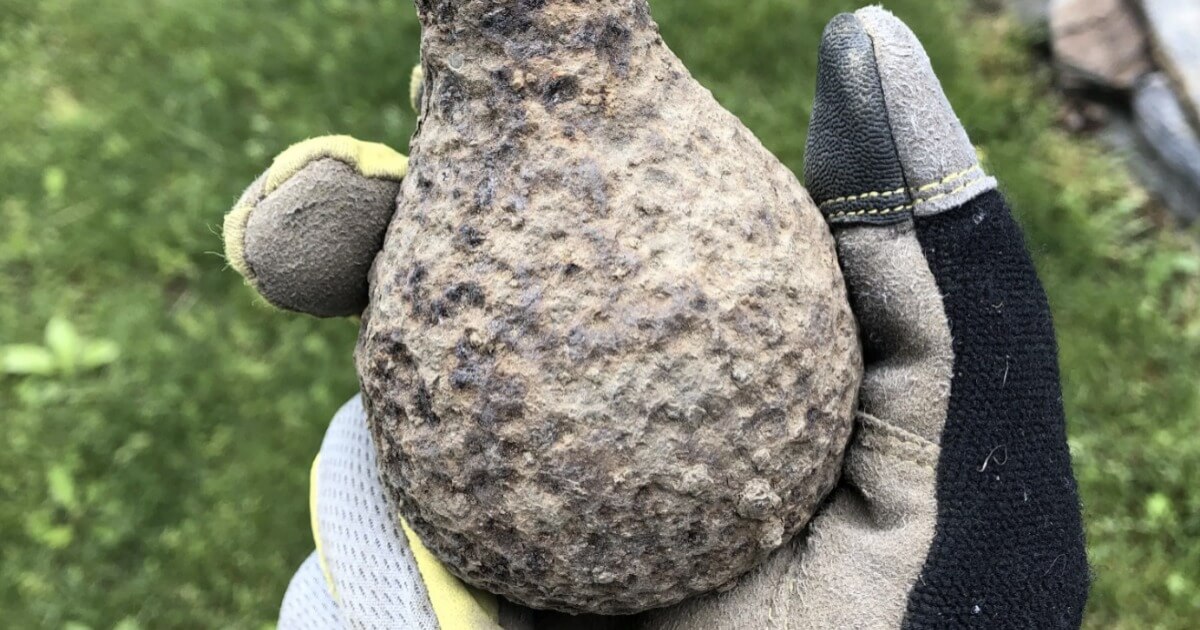
If you’ve ended up with a vintage beam scale counterweight, you’re holding a practical little relic from a time when measurements were done the old-fashioned way—mechanically, reliably, and built to last. Pieces like this once mattered a lot in country markets, general stores, barns, and farms, where accurate weighing was part of everyday life.
What Is a Beam Scale?
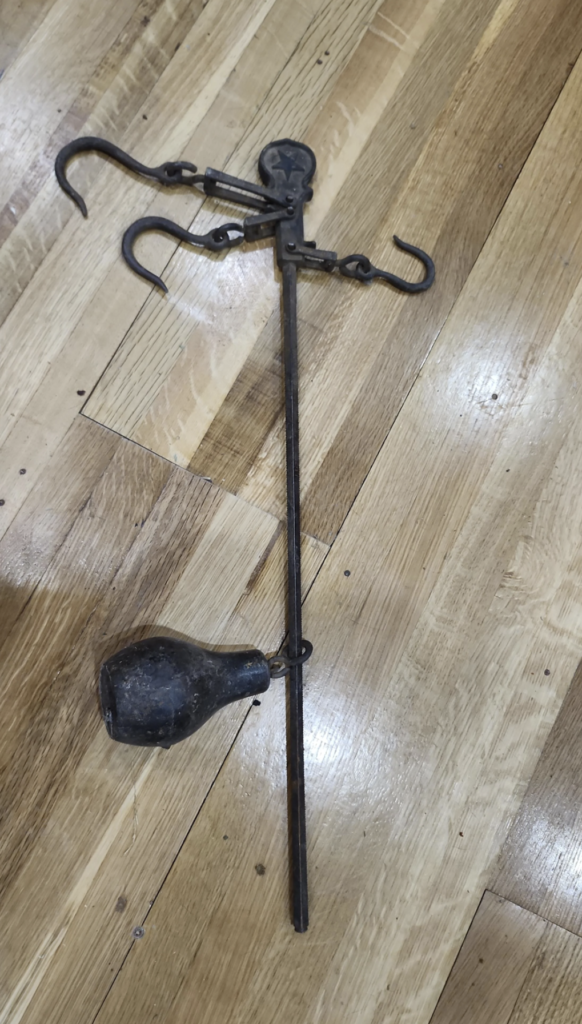
A beam scale—often called a steelyard scale—works using the lever principle. It was especially common in the 1800s and early 1900s, particularly in agricultural areas. A typical beam scale included:
- A metal beam marked with graduated weight measurements
- A movable counterpoise (counterweight) that slides along the beam
- Hooks for hanging the scale and suspending the item being weighed
To use it, a person would hang the item on one hook, then slide the counterweight along the beam until the scale balanced. Wherever the counterweight landed on the markings indicated the item’s weight.
The Role of the Counterweight
The counterweight itself was usually cast from iron and often shaped like a pear or droplet. Because it was such a solid, simple piece, it tended to survive for decades—even when the rest of the scale wore out, rusted, or disappeared over time.
Some counterweights can be identified by details like:
- Stamped numbers or maker’s marks
- Star symbols or other small emblems
- Casting marks that hint at origin or age
Today, many people collect these weights, and some even repurpose them as rustic décor because of their old-world charm.
Used Across Many Trades
Beam scales weren’t just for farmers. They showed up everywhere people needed honest, consistent measuring.
- Farmers used them for weighing sacks of grain, feed, or produce.
- Butchers relied on them to portion meat accurately.
- Merchants and traders used them to keep transactions fair and consistent.
Some were mounted in barns or shops, while others traveled with mobile traders who sold goods from place to place.
What to Do If You Have One
If you’ve found an entire beam scale—or just parts like the counterweight—here are a few smart options:
- Clean it gently: Use a soft brush to remove dust, dirt, and light surface rust.
- Display it: It makes a great historical conversation piece or rustic accent.
- Research the markings: Any stamps or symbols may help you identify the maker or time period.
- Use it casually: If the scale is complete and functional, it can still weigh items for demonstration or light, non-critical use.
A Small Object With a Long Story
A vintage beam scale counterweight is more than just a heavy chunk of metal. It’s a reminder of a time when tools were designed for durability, accuracy, and simplicity—no electricity, no delicate parts, and no modern fuss.
Even on its own, it represents practical ingenuity and craftsmanship that was made to endure.

