Last weekend, I stayed in a tiny old hotel in Saint-Cyprien.
It had one of those charmingly cramped elevators, wooden floors that creaked with every step, and towels so thin they were practically transparent.
I loved it immediately.
But nothing prepared me for what I found mounted above the bathroom sink.
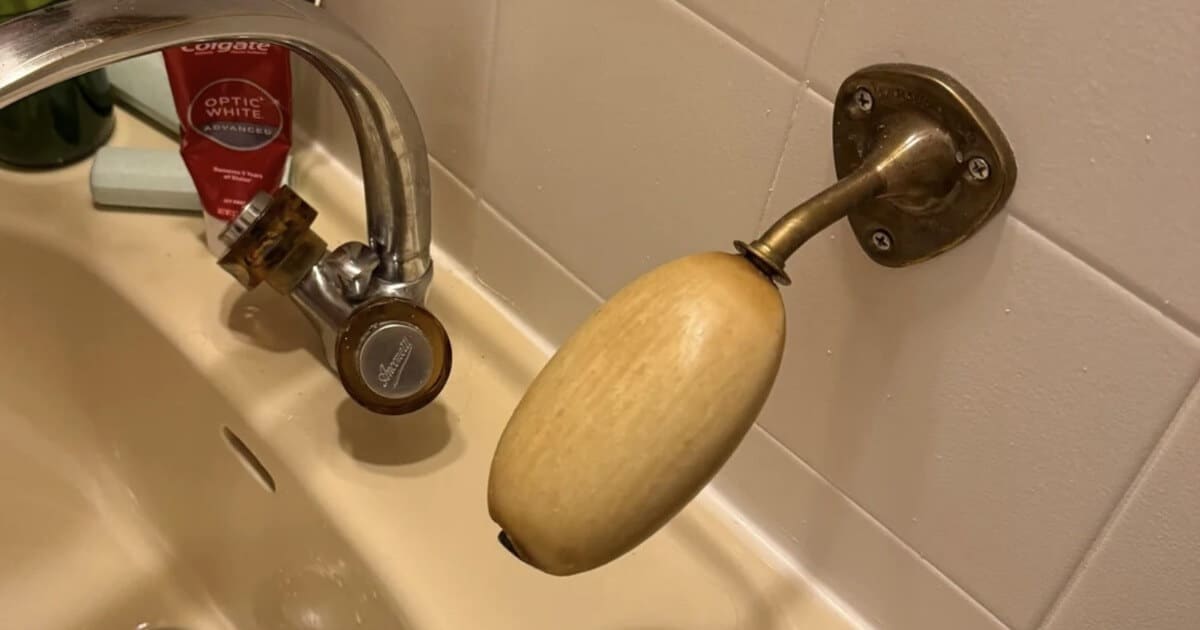
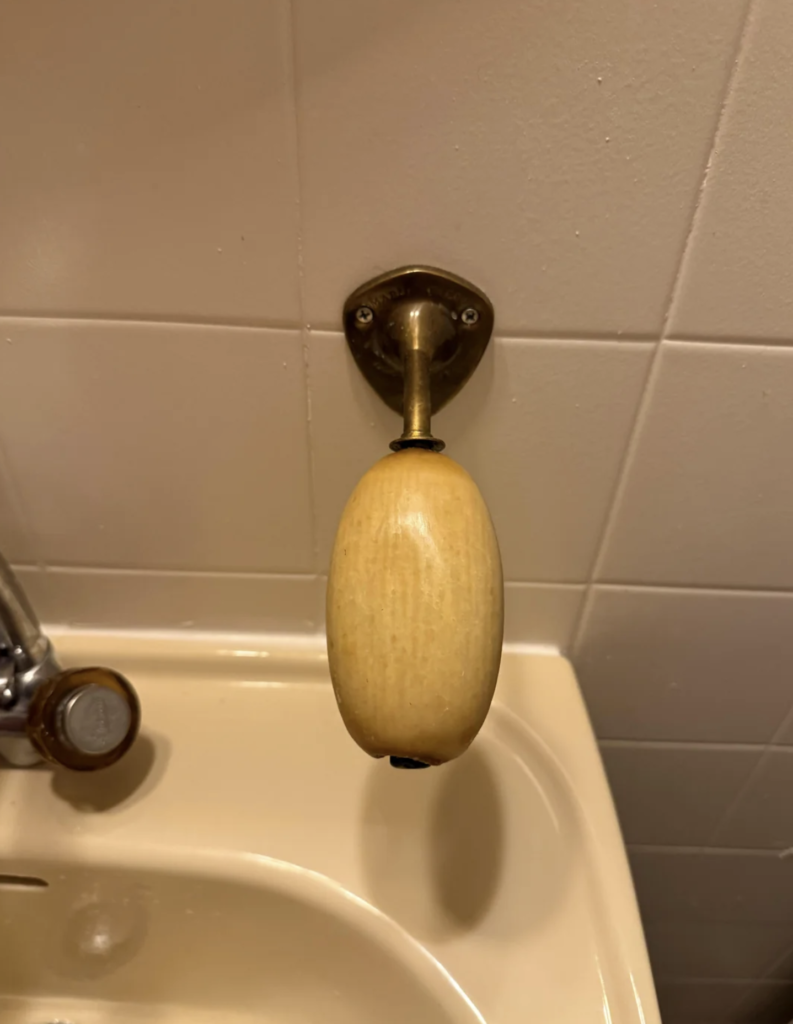
Sticking out of the tiled wall was a metal arm holding a smooth wooden egg-shaped object. Pale. Oval. Polished. Just… there.
Naturally, I did what any confused guest would do. I poked it. Turned it. Even smelled it.
Nothing.
No scent. No soap smell. No wood polish. No hint of what it was supposed to be. Just a mysterious object hanging confidently above the sink while a perfectly normal bottle of fancy hand gel sat nearby.
For a moment, I wondered if it was decorative. Or maybe some obscure plumbing knob.
It wasn’t.
It was a rotating wall-mounted soap holder—and I had no idea such a thing even existed.
So, What Exactly Is a Rotating Soap Holder?
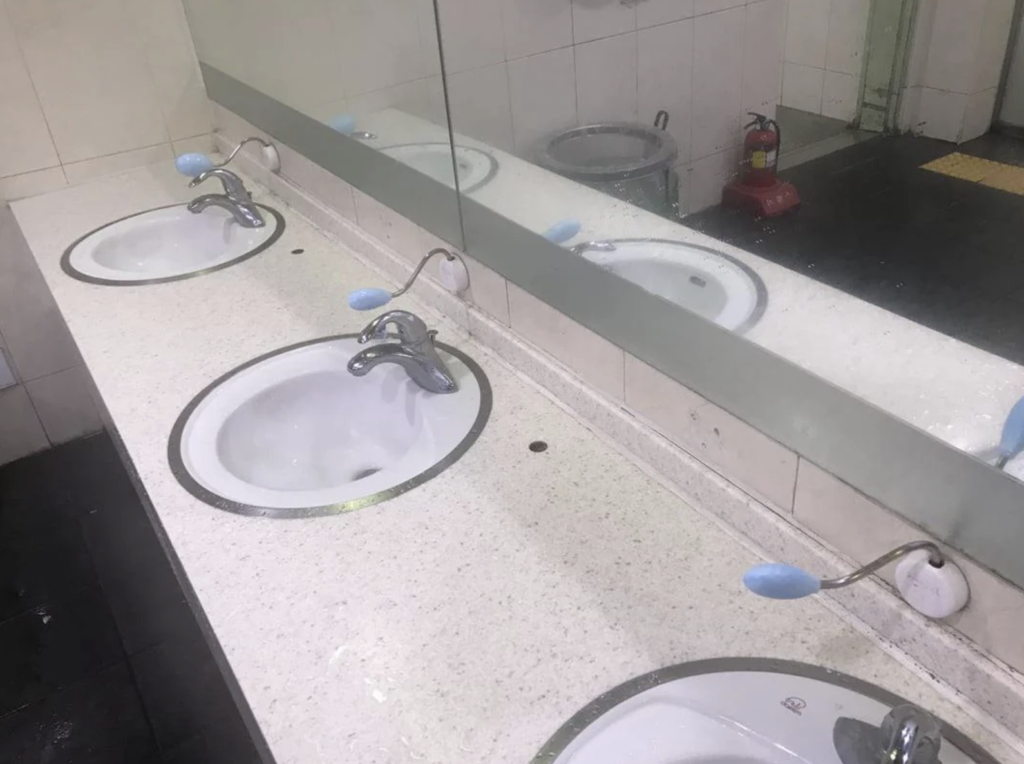
A wall-mounted rotating soap holder is a simple device: a metal bracket fixed to the wall, with a solid bar of soap shaped like a torpedo or oval mounted on a rod.
You wet your hands, spin the soap against them, and lather up.
That’s it.
For decades, these were common throughout France, Germany, and other parts of Europe. You’d find them in schools, public restrooms, hotels, and private homes. They solved everyday soap problems:
- No slimy soap dish
- No bar slipping into the sink
- No mushy residue
- Less waste overall
The soap itself was typically unscented or lightly perfumed and made extra hard so it wouldn’t crack or dissolve too quickly.
Simple. Functional. Built to last.
I Honestly Thought It Was Art
The one in my hotel bathroom looked so polished and intentional that I assumed it was decorative. Maybe some kind of sculptural detail. It didn’t scream “soap.”
After a quick search—something along the lines of “old wall soap France”—I realized I was staring at a vintage hygiene device.
And suddenly, I couldn’t stop thinking about how smart it was.
It felt very French: practical, understated, and designed to quietly do its job for decades without asking for attention.
Why Did These Disappear?
Like many clever old designs, rotating soap holders faded when liquid soap took over.
Liquid soap is easier to brand, package, market, and sell in plastic bottles. Foaming pumps became standard, and the spinning soap bars gradually disappeared from everyday life.
But interestingly, they’re starting to make a small comeback.
You can still buy wall mounts and refill soap bars. Some people are even reinstalling them in their homes as a way to reduce plastic waste. It’s not just nostalgia driving the revival—it’s practicality.
They’re genuinely efficient.
A Small Piece of Design Genius
The more I think about it, the more brilliant the concept feels.
You spin the bar, lather up, and it dries quickly between uses. There’s no puddle of soap goo. No plastic bottle to toss every few weeks. No complicated parts.
Just a bar of soap on a metal arm.
It doesn’t need batteries. It doesn’t need instructions. It doesn’t need branding.
In a hotel bathroom I almost overlooked, I stumbled across a tiny piece of functional design history. Something that quietly solved a problem and kept going without fanfare.
So if you ever see one mounted to a wall, don’t assume it’s decoration.
Give it a spin.
It’s soap—the kind that might have gotten it right the first time.

