I’ve always had a soft spot for mystery objects that turn up in old garages. Something big and unfamiliar appears, nobody knows what it is, and suddenly everyone becomes a part-time historian.
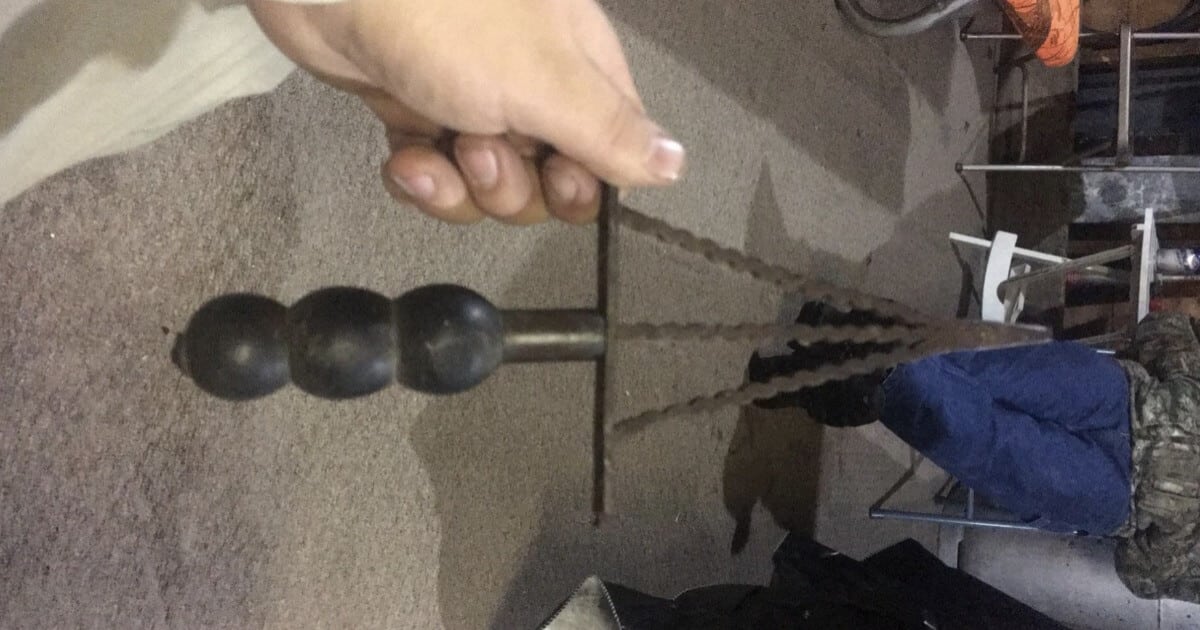
That’s exactly what happened with this handle-and-chain item found in a dad’s garage after he passed away.
The good news: it’s not a weapon. It’s not a farming tool. It’s a sad iron rest with chains—and it’s actually a really cool piece of practical household history.
What a Sad Iron Rest with Chains Is
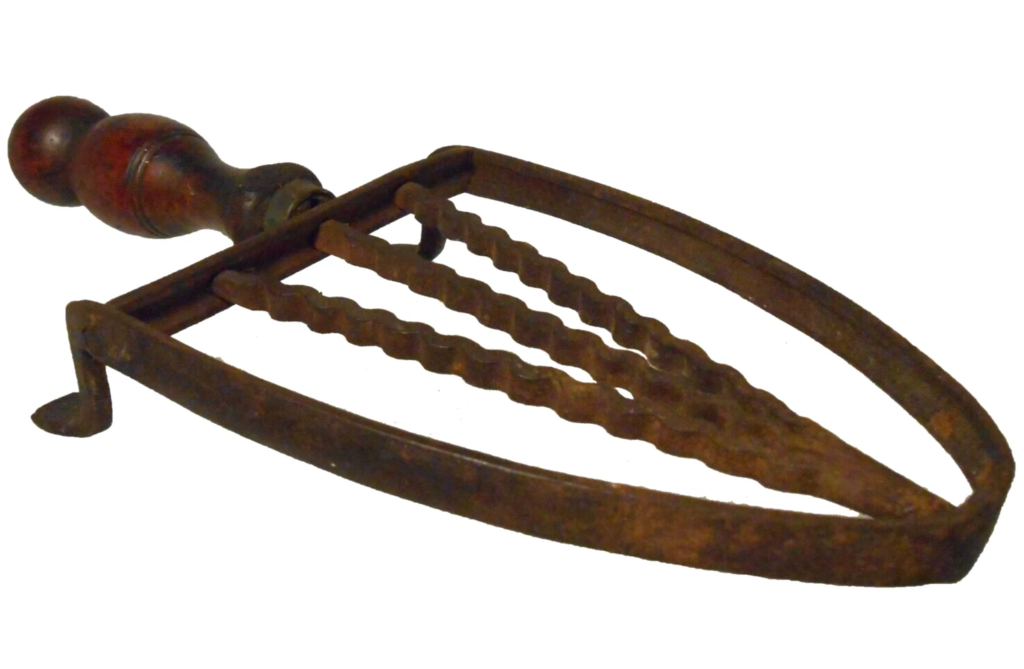
A sad iron rest with chains is an old tabletop stand designed to safely hold a hot flat iron when you’re not actively ironing.
Before electric irons, people used heavy cast-iron irons—often called “sad irons”—that were heated directly on a stove. Since those irons stayed blazing hot, you needed a safe place to set one down between passes without:
- scorching the table
- burning fabric
- starting a small household disaster
This particular style uses chains hanging from a handle-and-crossbar assembly. The chains form a sling or cradle that supports the iron while keeping it lifted above the surface below.
Why the Chains Were So Useful
Those chains aren’t decorative—they’re doing real work.
They helped in a few ways:
- Reduced heat transfer: The iron didn’t sit flat on the table, so less heat was directly conducted into the surface.
- Better airflow: Air could circulate around the iron, helping it cool more evenly.
- More stability: The chain sling helped keep the iron from sliding or tipping as easily as it might on a flat trivet.
Simple idea, smart execution.
The Missing Horseshoe Base
Here’s the part that confuses most people: many of these rests were originally two pieces.
What often gets found (and what your photo likely shows) is just the upper chain-and-handle assembly.
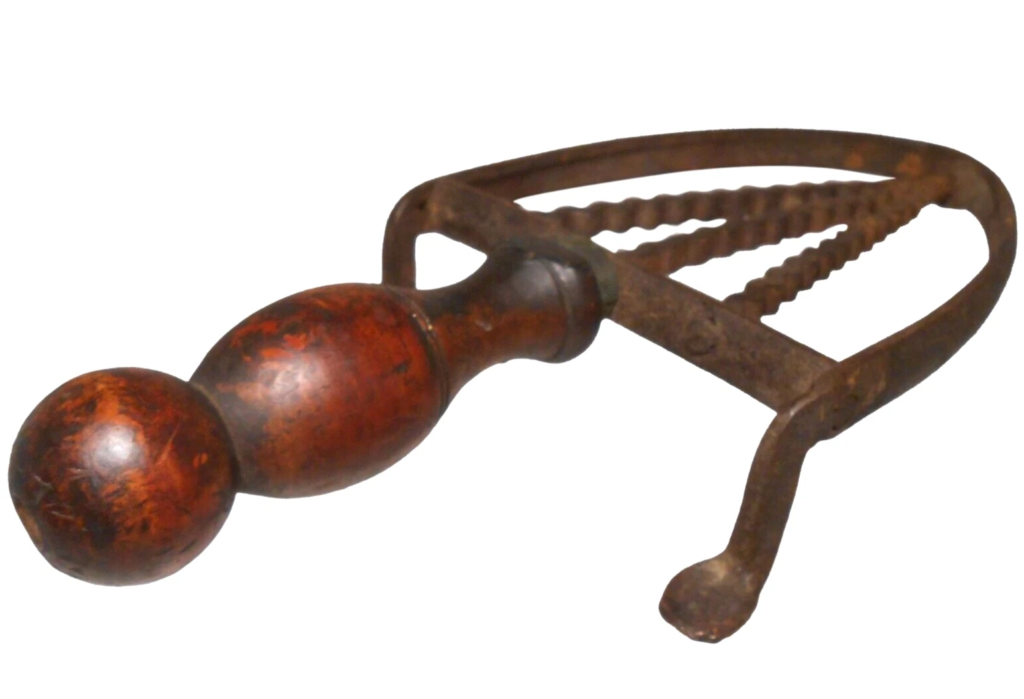
The missing lower part is usually a horseshoe or U-shaped base with short legs. That base sits on the table or stove and gives the whole setup a stable footprint.
Without that base, the chain portion looks like some random shop tool. Put it together with the base, and it’s instantly obvious: it’s a stand for a hot iron.
How People Used It Day-to-Day
The workflow was pretty practical:
- Heat a sad iron on the stove
- Iron in stages
- Between presses, set the hot iron into the chain cradle
Many households kept two irons so one could heat while the other was in use. That meant a hot iron was always in rotation—and a safe stand like this made a lot of sense.
Why This Ends Up in “What Is This Thing?” Piles
The base can easily look like scrap metal and get separated, tossed, or lost over the years.
But the chain-and-handle piece looks unusual and intentional, so people keep it—especially if they’re cleaning out an old house or garage and can’t bring themselves to throw it away.
That’s how these end up being mistaken for things like a chain wrench, fireplace tool, or some oddball farm implement.
Quick Ways to Confirm You Have One
Look for:
- a wooden or metal handle
- a short crossbar directly beneath the handle
- multiple chains hanging down to form a sling
- signs it once attached to a separate base
Helpful search terms if you’re hunting for matching parts:
“sad iron rest with chains,” “sad iron stand,” “flat iron trivet chain.”
What to Do If You’ve Got One
If it’s a family piece, it’s honestly great as-is. It makes a fantastic conversation starter and a small window into everyday life before electricity made everything easier.
If you want to complete it, you can try tracking down the missing horseshoe/U-shaped base—those sometimes pop up on their own in antique shops or online listings.
That’s the story behind the “strange chain thing”: old-school laundry history, built for a time when your iron came straight off the stove and nobody wanted a scorched tabletop to prove it.

