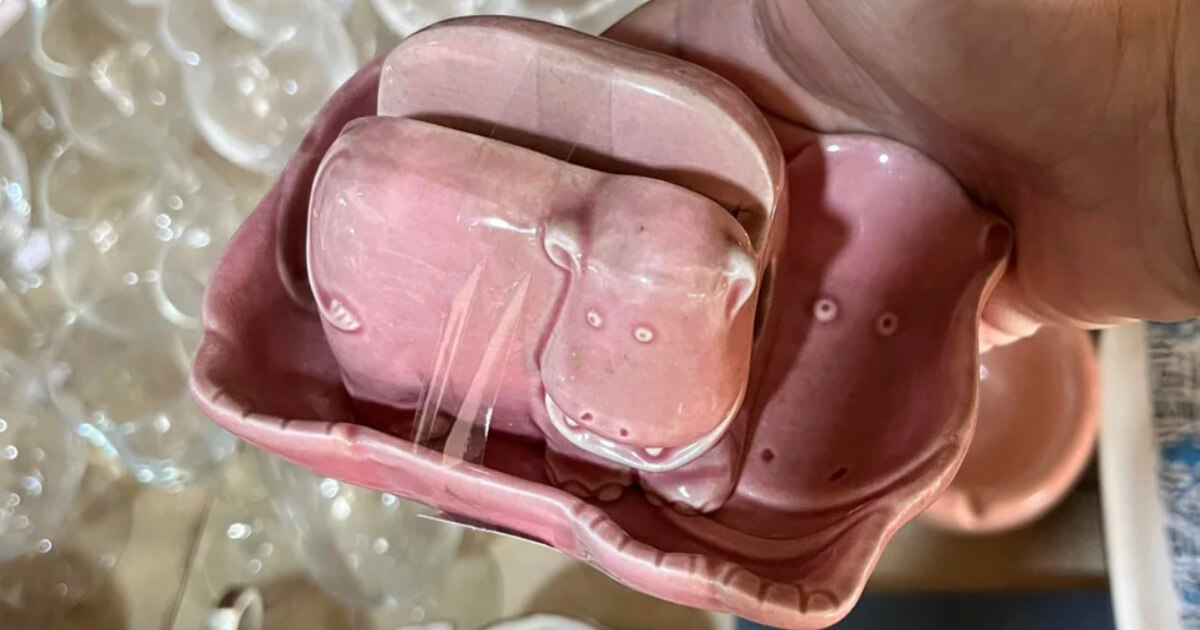
You know that strange moment when you’re browsing a thrift store shelf and an object seems to stare back at you like it once had an important job… but nobody remembers what it was? That’s exactly the feeling many people get when they come across a tiny ceramic hippo dish.
It’s cute. It’s oddly specific. And it looks like it belongs in a mid-century bathroom next to a pastel tumbler and a bar of soap that never quite melts.
But this little hippo likely wasn’t just decoration. It may have been something surprisingly practical: a toothpaste tube squeezer dish.
Why People Needed Toothpaste Squeezers
Back when toothpaste came in metal tubes — and even in early stubborn plastic ones — wasting a drop felt almost unthinkable. People didn’t just toss a tube when it seemed empty. They flattened it, rolled it, and coaxed out every last bit.
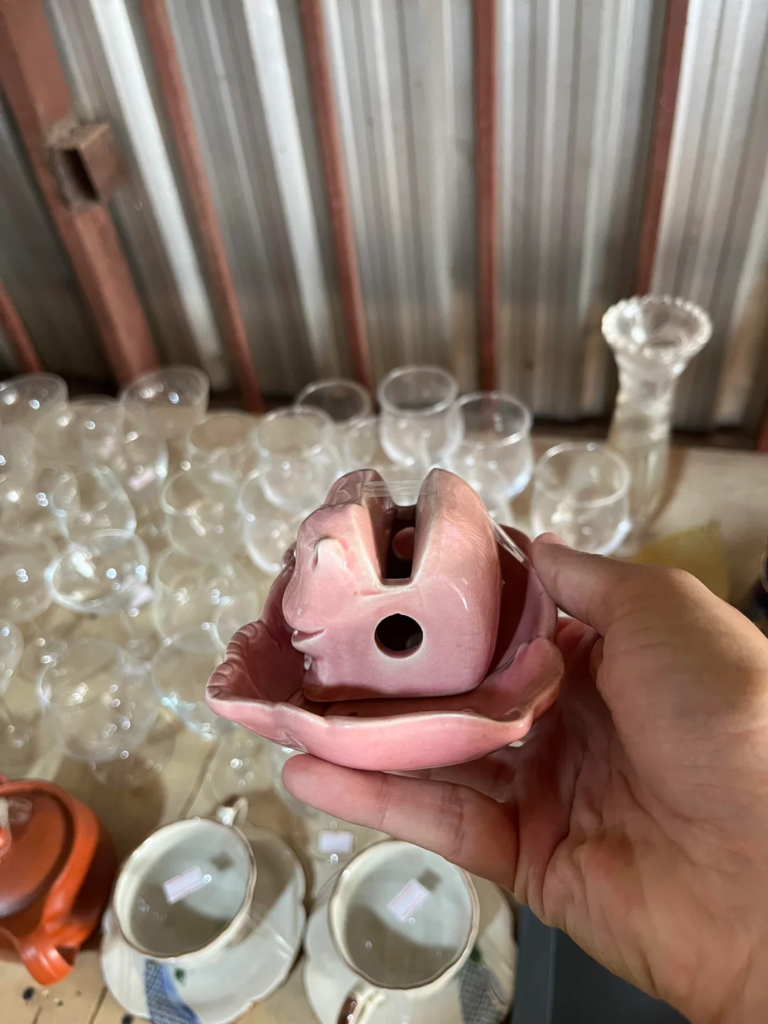
That’s where tube squeezers came in. Some were simple metal clips attached to the end of the tube. Others used rods or pins that allowed you to roll the tube up neatly, almost like pulling down a tiny window shade.
A ceramic dish shaped like a hippo may have combined both functions: holding the tube in place while also helping you roll it tight.
How the Hippo Dish Was Probably Used
When you take a closer look at the design, the purpose starts to make sense. The hippo’s “body” acts as a shallow tray, while a long groove provides space for a toothpaste tube to rest.
The small holes along the sides are the real clue. They were likely meant to hold a thin rod or pin threaded through the folded end of the tube.
Here’s how it likely worked:
- The end of the toothpaste tube was folded around a small rod
- The rod was placed into the holes on the dish
- Rolling the rod tightened the tube as toothpaste was used
- This kept the tube flatter, cleaner, and easier to manage
It was a simple system — slightly fussy perhaps — but also oddly satisfying. Much like neatly winding a cord instead of stuffing it into a drawer.
A Neat Solution for Mid-Century Bathrooms
Beyond saving toothpaste, the dish also helped maintain order. Bathrooms in earlier decades often emphasized tidy presentation. Everything had a designated place.
Toothpaste, however, was notoriously messy. Tubes could leak, caps collected hardened paste, and counters ended up sticky. A raised ceramic tray helped contain the clutter and made the sink area look more put together.
For households that valued organization and appearance, this small accessory solved a surprisingly common annoyance.
Why Make It a Hippo?
Of course, the practical function could have been achieved with a plain tray. Instead, designers chose to turn it into an animal.
That choice says a lot about the era. Mid-century housewares often blended usefulness with charm. Even everyday routines like brushing your teeth could feel more cheerful with a playful object nearby.
It likely helped encourage children to develop brushing habits too. A friendly hippo on the vanity made the whole ritual feel less like a chore.
Could It Have Served Other Purposes?
Vintage finds often spark debate, and this one is no exception. Some people suggest similar ceramic dishes may have been used as:
- Soap holders
- Sponge rests
- Small trinket trays
- Novelty candy dishes
However, the combination of a long groove and side holes strongly suggests a rolling mechanism rather than simple storage. Those features seem designed for function rather than decoration alone.
How to Identify One
If you happen to discover a similar hippo dish, a few details might support the toothpaste-squeezer theory:
- Holes positioned so a rod could sit securely across them
- Wear marks along the groove where a tube may have rested
- Matching glaze or design elements with vintage bathroom sets
Sometimes the original rod or pin is missing, which can make the item confusing at first glance. When the piece is complete, its purpose becomes much clearer.
Ways to Use It Today
Even if you don’t plan to roll toothpaste tubes like it’s the 1960s, the hippo dish can still be useful and charming. You might repurpose it as:
- A ring or earring tray near the sink
- A holder for bobby pins or hair accessories
- A spot for hand cream or cosmetic tubes
- A soap dish, if the glaze and drainage allow
If you want the authentic experience, though, you can try using a small dowel or smooth skewer as a roller. Watching a wrinkled tube transform into a neat, tight roll is oddly satisfying.
Why Vintage Finds Like This Feel Special
Part of the joy of thrifting is discovering objects from a time when even small inconveniences inspired thoughtful solutions — and those solutions often had personality.
You may not need a ceramic hippo toothpaste squeezer dish. It won’t change your life.
But it’s a delightful reminder of an era that valued practicality, playfulness, and craftsmanship — and of how everyday routines once came with a little extra character.