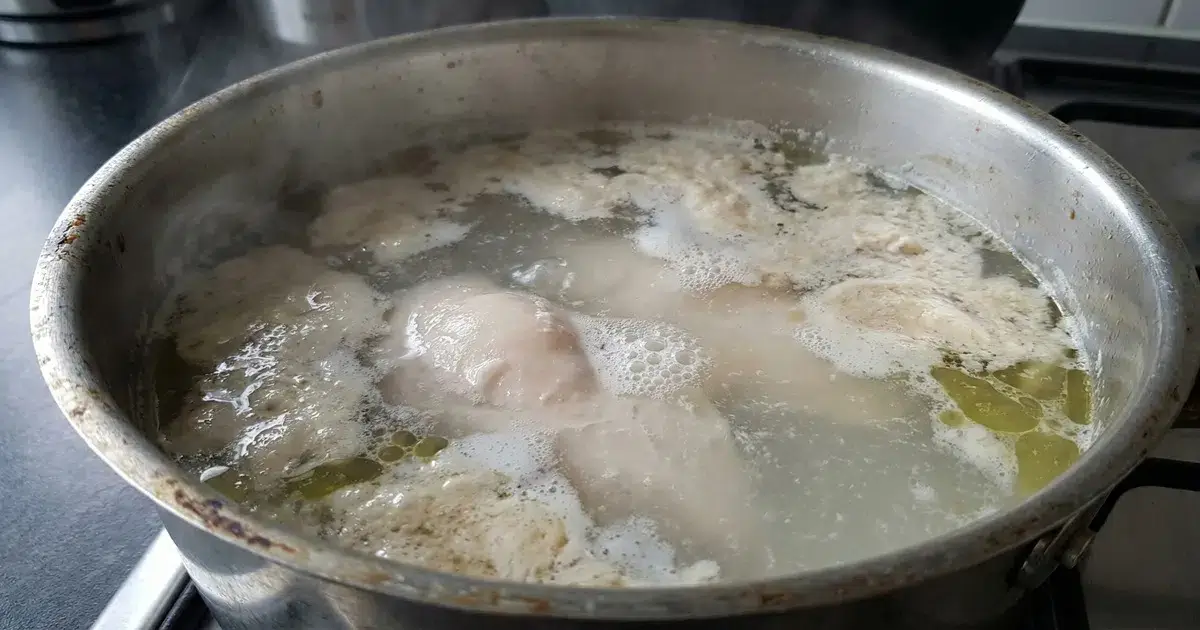
The first time you boil chicken and notice a layer of white foam forming on top of the water, it can feel a little alarming. It might look like soap suds or some kind of chemical reaction, and many people instantly wonder whether the meat has gone bad.
The good news is that this reaction is very common — and in most cases, completely normal. Once you understand what’s happening, it becomes much less mysterious.
What Causes the White Foam?
The foamy layer that appears when chicken is boiled or simmered is mainly made up of proteins that have changed structure due to heat. One of the key proteins involved is albumin, which is naturally present in meat.
As the chicken cooks, these proteins unwind and rise to the surface of the liquid. Along with small amounts of fat and other natural particles from the meat or bones, they create the cloudy, bubbly foam you see floating on top.
Boiling tends to make the foam more noticeable because the movement of the water pushes these particles upward. So if you see foam forming during cooking, it is usually just the result of normal food science at work.
Is Chicken Foam Safe?
A common worry is whether this foam means the chicken is unsafe to eat. In most situations, the answer is no — the foam itself is harmless. It is simply made from natural components already present in the meat.
However, foam should not be confused with signs of spoilage. Chicken that smells sour or like ammonia, feels unusually sticky or slimy, or has turned gray or greenish should be discarded. These are genuine warning signs.
If the only unusual thing you notice is white foam during cooking, there is usually no cause for concern.
Why Some Chicken Produces More Foam
Not all chicken creates the same amount of foam. Several factors can influence how much appears:
- Frozen chicken may release more water and proteins while cooking
- Bone-in or skin-on cuts often create more foam than boneless pieces
- Lean cuts, like chicken breast, can produce more protein foam
- Rapid boiling generates more foam than gentle simmering
Differences in processing, storage, or freshness can also play a role, but foam alone does not mean the chicken is poor quality.
Does Foam Affect Taste or Quality?
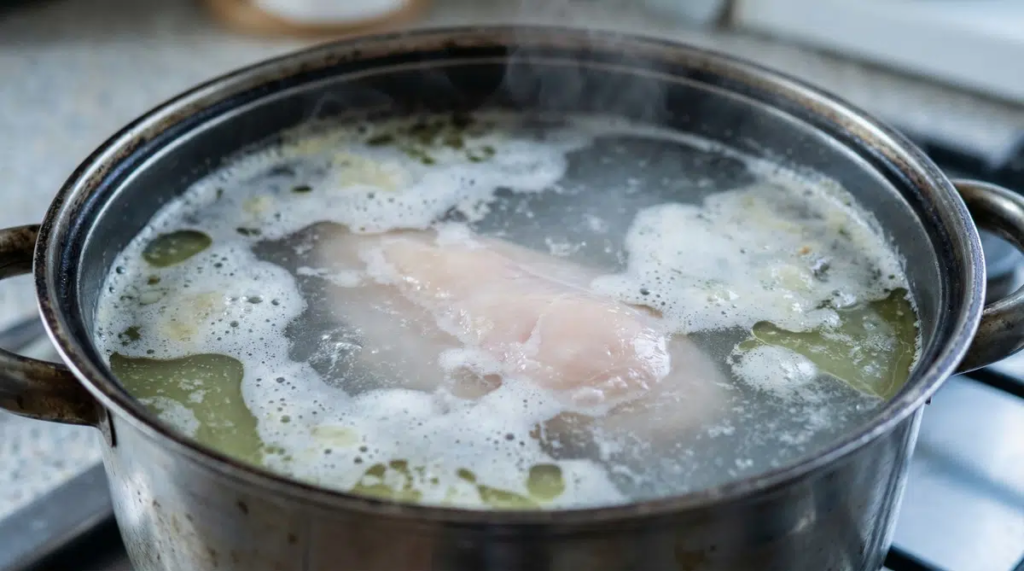
The foam itself has very little flavor. But if you leave it in the pot while making soup or stock, it can make the broth look cloudy instead of clear and golden.
For recipes where appearance matters — such as light broths, consommé, or certain noodle soups — removing the foam can help create a cleaner-looking result. In heartier dishes like stews or shredded chicken recipes, it usually makes little difference.
Should You Remove It?
Whether you skim the foam depends on what you are cooking.
If you want a clear broth, gently remove the foam with a spoon or fine-mesh strainer as it forms. Lowering the heat to a steady simmer can also reduce additional foam.
If you are simply boiling chicken to shred for salads, tacos, or pasta dishes, you can safely ignore it.
Common Misunderstandings About Chicken Foam
There are several myths about this cooking phenomenon:
- Foam does not mean chemicals have been added
- It is not a sign that the chicken is automatically spoiled
- You do not have to throw the chicken away because of it
Understanding the science behind the foam helps take the stress out of cooking.
A Normal Part of Cooking
In the end, the white foam that forms when chicken is boiled is just a natural reaction between heat and the proteins in the meat. It is something you can skim off for a clearer broth or leave alone if it does not matter for your recipe.
Once you know what it is, there is no need to panic. It is simply one of the many small, everyday quirks that come with preparing food at home.