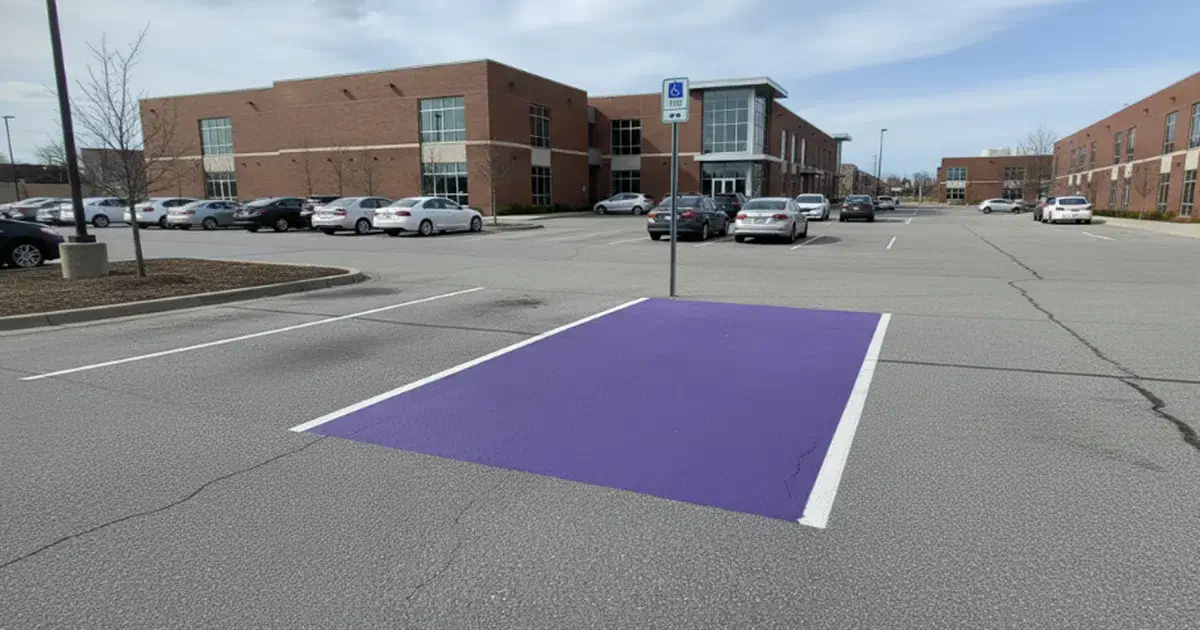
The first time I noticed a bright purple parking space, it caught me completely off guard. It was near the front entrance of a shopping center, clearly marked, but it was not a handicap space and it was not a loading zone either. It was just… purple. Naturally, I looked up at the sign to figure out what made this one different.
That is when I realized it was not just about color. It stood for something far more meaningful.
If you have ever seen a purple parking space and wondered what it means, the answer is usually this: it is often reserved to honor Purple Heart recipients. The Purple Heart is a U.S. military decoration awarded to service members who were wounded or killed in combat. These spaces are meant to recognize those sacrifices and offer recipients a place of convenience and respect.
That said, purple parking spaces are not handled exactly the same way everywhere. They are not governed by a single federal law, which means the rules can vary depending on the state, city, or property owner. That is why it is always important to read the posted sign before using one.
Why the Purple Heart Is Purple
The Purple Heart is one of the oldest military honors still awarded in the United States today. It has been in use since 1932 and is given to members of the military who were injured or killed in action. For recipients and their families, it carries deep meaning and tremendous honor.
The medal itself is heart-shaped, with a purple background and a gold border, and it features a portrait of George Washington. That is why purple is used for these parking spaces. The color is a direct visual reference to the medal and what it represents.
When a business, city, or organization designates a purple parking space, it is creating a visible tribute to combat-wounded veterans. It may seem like a small gesture, but it carries a powerful message of appreciation and respect.
How to Recognize a Purple Parking Space
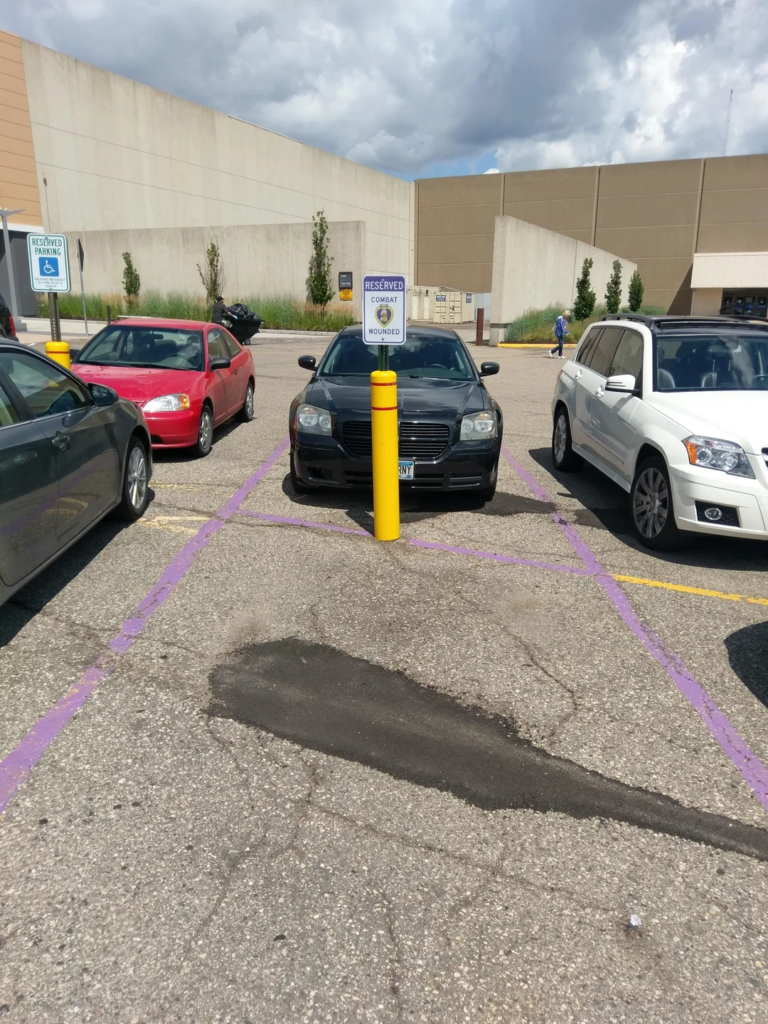
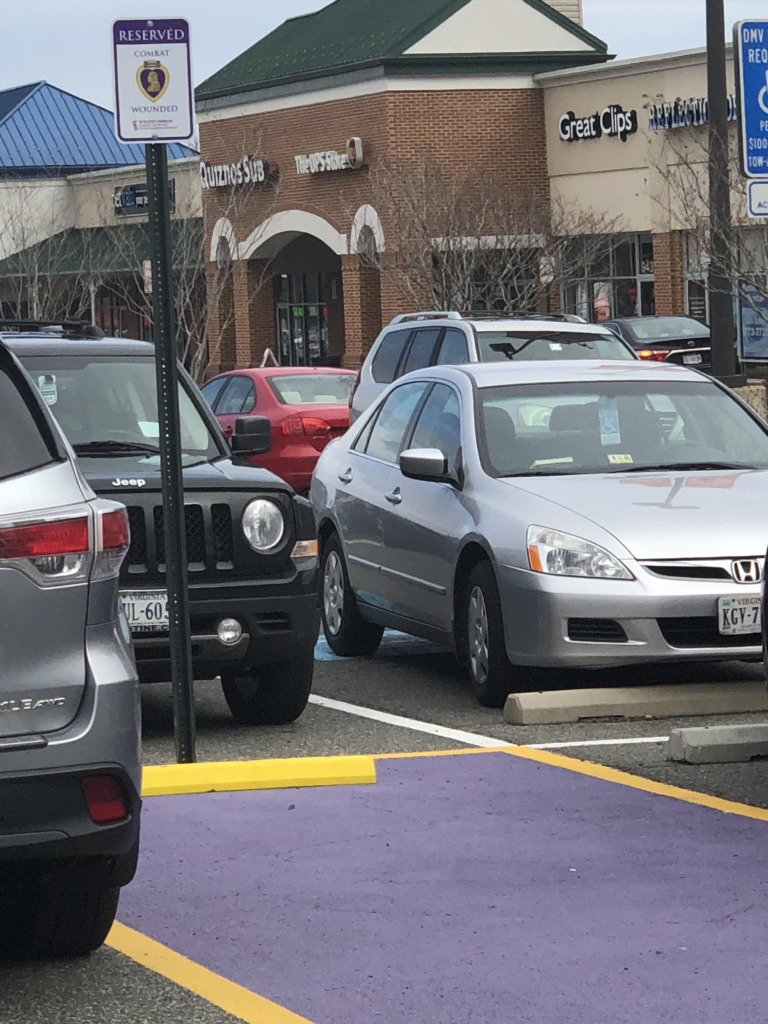
Purple parking spaces are usually easy to spot. Some are painted entirely purple, while others may only have purple borders, stripes, or accents. They are often placed in noticeable, convenient areas, such as near a main entrance or in a high-traffic part of the lot.
In most cases, there will also be a sign posted above or beside the space. That sign may say the space is reserved for Purple Heart recipients, combat-wounded veterans, or it may include an image of the Purple Heart medal itself. Sometimes the sign also mentions the veterans’ group or local organization that helped sponsor the space.
There is no single national design standard, so appearances can vary. Still, purple paint combined with military or veteran-related signage is usually a strong clue.
Who Is Allowed to Park There?
This is the most important part: if you are not authorized to use a purple parking space, do not park there.
These spaces are generally meant for Purple Heart recipients—veterans who were wounded in combat while serving in the U.S. military. In some places, those authorized to use the space may have a Purple Heart license plate, a special veteran ID, or another form of official documentation. The exact requirements can differ depending on local rules and policies.
But the basic principle is simple. If you have not earned the Purple Heart, the respectful choice is to leave the space open.
Even if you are only stopping for a minute, even if the lot is crowded, and even if the space appears unused, it is still meant for someone else. These spaces exist to honor serious sacrifice, and they should be treated that way.
Are Purple Parking Spaces Required by Federal Law?
A lot of people assume purple parking spaces are regulated the same way handicap parking is, but that is not the case.
Purple parking spaces are not required by the Americans with Disabilities Act. The ADA covers blue accessible parking spaces and sets strict standards for those spaces, but it does not include purple spaces.
Instead, purple parking spaces are usually created through state laws, local programs, veteran-led efforts, or private property initiatives. In some places, veteran organizations such as the VFW have worked with local governments or businesses to create them. In other areas, DMVs, public buildings, or retailers have added them voluntarily as a way to honor wounded veterans.
Some states have passed laws allowing or supporting the creation of purple parking spaces, but that does not necessarily mean they are required everywhere.
Because there is no federal standard, enforcement also varies. In some locations, unauthorized use can lead to a fine or penalty. In others, there may be no legal consequence at all. But even where enforcement is weak, the social meaning remains strong. Parking in one without authorization can still be seen as deeply disrespectful.
Where You Might See Them
Once you know what they represent, you may start noticing purple parking spaces in more places than you expected.
They can appear at DMVs, VA hospitals, airports, city buildings, VFW posts, American Legion locations, schools, grocery stores, shopping centers, and other public or private properties. Because many of these spaces are installed locally, their appearance and signage may differ quite a bit from place to place.
Still, the two most reliable clues are the purple marking and the posted sign.
How Purple Spaces Compare to Other Colored Parking Spaces
Parking lot colors can get confusing, especially since different colors often carry specific meanings.
Blue spaces are for accessible parking and are regulated under the ADA. Red, yellow, white, and green may indicate fire lanes, loading zones, short-term parking, or other local uses depending on the property or municipality.
Purple is different. It is generally not part of the standard regulatory color system. Instead, it is used as a symbolic and honorary designation for Purple Heart recipients and combat-wounded veterans.
That is why it is always worth checking the sign rather than assuming the color alone tells the whole story.
When You’re Not Sure, Choose Respect
If you are a Purple Heart recipient, these spaces exist to recognize your service and sacrifice, and you should feel fully entitled to use them.
If you are not, the right thing to do is simple: leave the space open.
And if you ever come across a purple parking space and are unsure what it means in that location, take a moment to read the sign or ask someone nearby. It only takes a few seconds, and it helps ensure you are showing the respect that space was meant to represent.