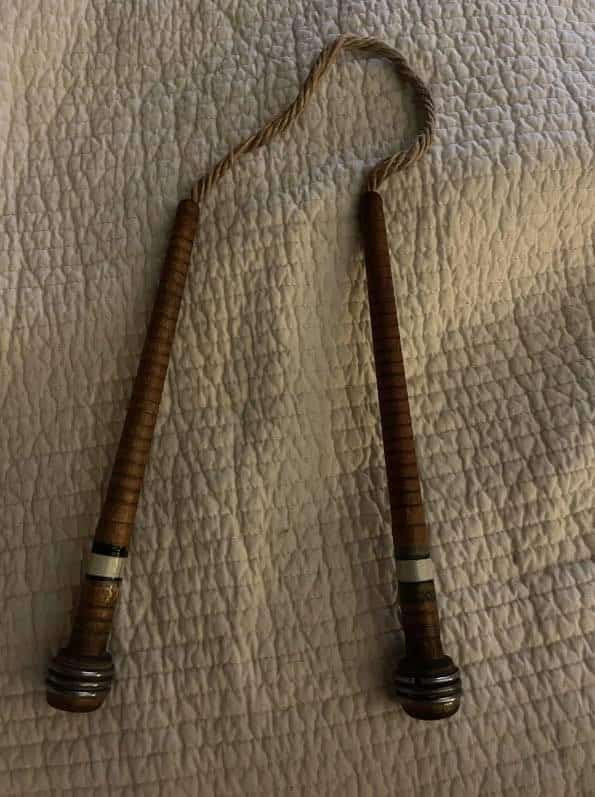
At first glance, these unusual wooden items look like decorative antiques or even something mechanical. In reality, they are textile bobbins—simple yet essential tools once used to wind thread or yarn after it was spun. Their sturdy wooden bodies, paired with metal details and a reflective stripe, hint at use in busy industrial environments where strength, longevity, and visibility all mattered.
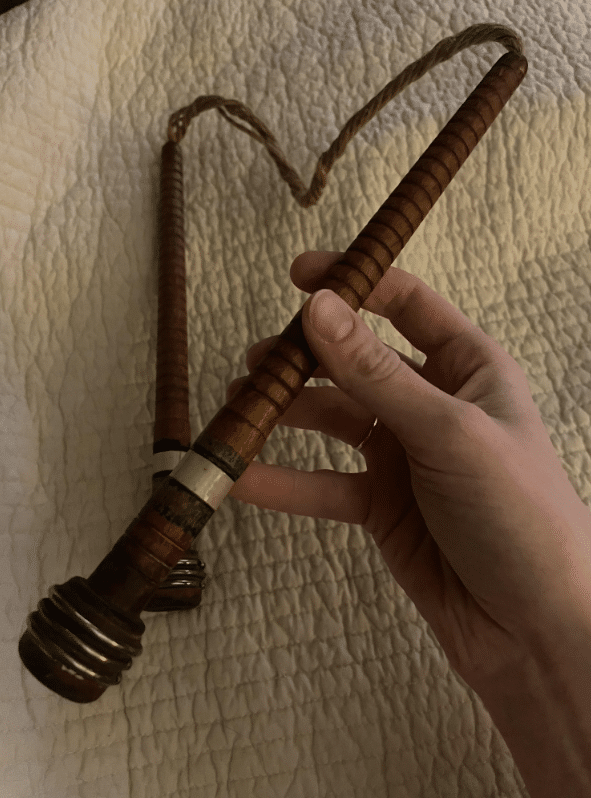
Most bobbins were crafted from wood because it was durable, easy to shape on a lathe, and gentle on delicate fibers. The added metal components helped reinforce the structure and likely guided the thread smoothly as it was wound, reducing wear and tangling during use.
The jute string tying the two bobbins together wasn’t accidental and likely served several practical purposes. Keeping bobbins connected made storage easier and reduced the chance of losing individual pieces in large textile facilities. In mills where organization was critical, pairing them together helped maintain order.
Transport was another key reason. Linked bobbins could be hung on hooks or rods, allowing workers to move multiple units at once or keep them within easy reach at their stations. The string may also have acted as a simple identification system, marking bobbins that belonged to a specific batch or held a certain type of yarn.
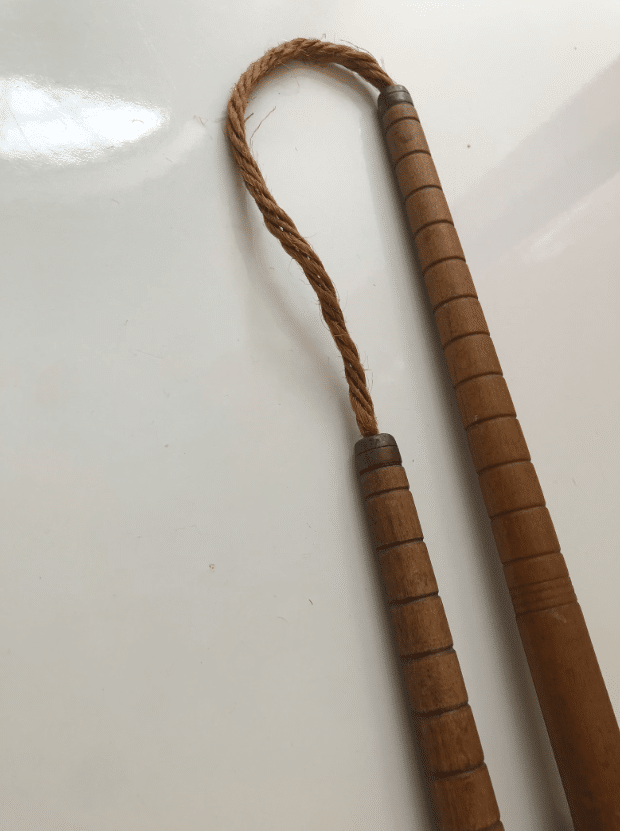
During operation, bobbins were mounted on rods within spinning or weaving machines. Thread was pulled from them smoothly and evenly, guided by the polished surfaces and metal edges. This setup ensured consistent tension, helping produce high-quality textiles without snags or defects.
While modern textile manufacturing now relies on advanced, automated systems, these vintage bobbins haven’t lost their appeal. Today, they’re prized by collectors for their craftsmanship and history. Many people also repurpose them into unique home décor pieces, such as candle holders or artistic displays. When shown connected by jute string, they offer a striking visual reminder of how traditional textile production once worked and how every part of the process was thoughtfully connected.

