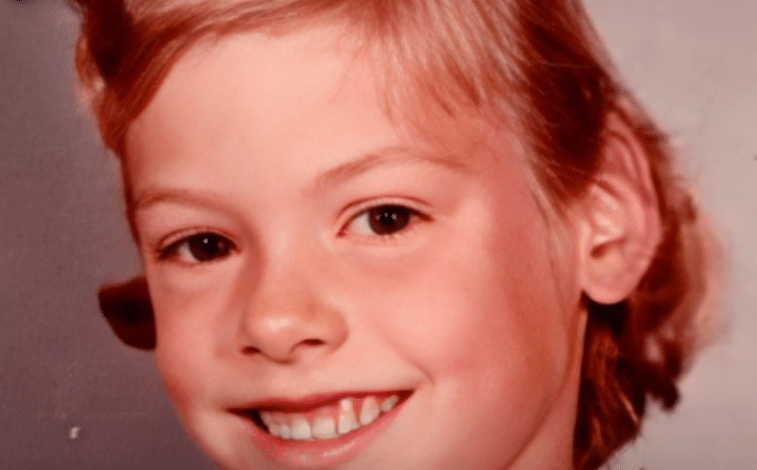
In a faded childhood photo, she looks harmless. Wide-eyed. Small. Holding onto an innocence she would never keep. That little girl would later become one of America’s most infamous female criminals, her life shaped by trauma and choices that shocked the nation.
This Child Grew Up To Become One Of The Most Troubling Figures In Modern History
Born in 1956 in Rochester, Michigan, Aileen Wuornos entered the world surrounded by instability. Her father had a long history of serious crimes and was sentenced to life in prison for offenses involving a child. He later died by suicide while incarcerated. Soon after, her mother left the family, and Aileen and her brother were raised by their grandparents.
Any sense of stability faded quickly. Wuornos later stated that her grandmother struggled with alcohol and that her grandfather subjected her to severe physical and emotional abuse throughout her childhood. Her early years were marked by fear, instability, and silence, creating a foundation for long-term emotional damage.
At fourteen, she became pregnant after a violent assault. Rumors later suggested the father may have been her own brother. She gave birth to a son and placed him up for adoption, believing it was his only chance at a better life. While most teenagers focused on everyday milestones, she had already experienced trauma far beyond her years.
After her grandmother passed away, Wuornos left school and survived by selling sex on the streets. Throughout the 1970s, her arrest record grew, including charges related to disorderly conduct, assault, shoplifting, and prostitution. In 1976, her brother died, followed by her grandfather’s suicide. Each loss pushed her further into emotional isolation.
Hoping for a fresh start, she hitchhiked to Florida. Instead of finding stability, her situation worsened. In 1982, she was arrested for armed robbery. By that time, she had attempted suicide multiple times. Ongoing poverty, untreated mental health struggles, and lifelong trauma brought her closer to a breaking point.
The Murders
Florida became the setting for her violent actions. While working as a highway prostitute, Wuornos met Richard Mallory, a 51-year-old electronics store owner. They drove to a wooded area outside Daytona, where she shot him three times.
At first, she said they argued over money. Later, she claimed Mallory violently attacked her and that she acted in self-defense. Information about Mallory’s past offenses surfaced only after her conviction. By then, public opinion had already formed.
What was not yet clear was that Mallory would not be the last victim.
Between December 1989 and November 1990, Wuornos killed seven men across Florida. Her victims included construction workers, a rodeo hand, a retired police chief, and a truck driver. Each time, she claimed the men attempted to assault her. Each time, she used a firearm.
The growing number of victims overwhelmed her defense. Ballistics evidence and stolen property connected the crimes. Her confessions were emotional, inconsistent, and erratic, sealing her fate.
She was charged with six counts of first-degree murder. One victim’s body was never recovered, though she admitted responsibility. In the end, she received six death sentences.
The “Damsel of Death”
Her name became widely known: Aileen Wuornos.
Labeled the “Damsel of Death,” she became a media obsession. Her life story, marked by abuse, homelessness, and violence, was analyzed and debated endlessly. Some viewed her as a calculated predator. Others saw a deeply traumatized woman who broke under years of neglect. Mental health experts pointed to severe psychological damage, while prosecutors portrayed her as a deliberate killer.
On October 9, 2002, at the age of forty-six, Wuornos was executed by lethal injection. In her final years, she alternated between maintaining her self-defense claims and expressing paranoia and anger. To some, she remained a villain. To others, a tragic outcome of long-term abuse. To many, she stood as a disturbing example of what can emerge from a childhood filled with pain.

