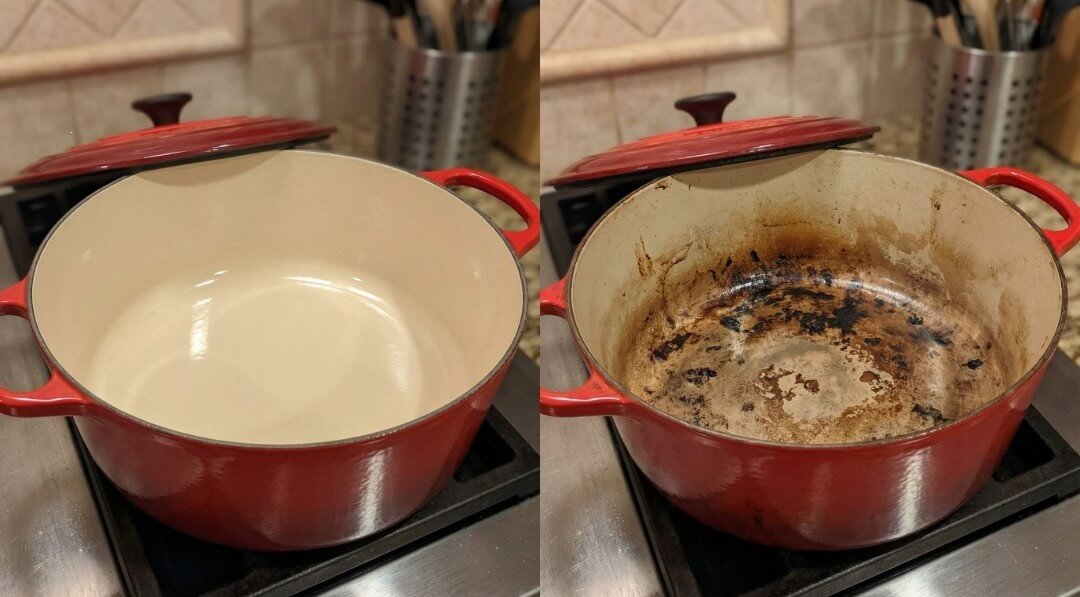
We’ve all seen those viral cleaning videos claiming you can restore a stained Dutch oven by boiling baking soda and water. It looks effortless on screen. I’ve tried it myself — and while it helped a bit, it definitely wasn’t the miracle solution people make it out to be.
The baking soda trick can lift light stains and mild buildup, but when your Dutch oven has deep black, yellow, or red marks from burnt food, it usually won’t fully fix the problem. Let’s break down why it works sometimes, when it doesn’t, and what you can safely do instead.
What Causes Stains on Enameled Dutch Ovens?
Before blaming your cookware, it helps to understand what’s actually creating the discoloration. An enameled Dutch oven is coated with a glass-like enamel layer that resists rust and keeps food from sticking. Still, stains can develop over time due to common cooking habits.
Some frequent causes include polymerized oils that leave brown films, burned-on food (especially sugary or starchy meals), deeply pigmented sauces like tomato or curry, and heat-related discoloration from prolonged high temperatures.
Not every stain means your pot is dirty. Some discoloration is simply cosmetic aging of the enamel. My own Dutch oven has faint orange marks that aren’t removable — and that’s okay. They’re more like seasoning than grime.
Does Boiling Baking Soda Really Work?
Baking soda is mildly alkaline, which means it can help loosen greasy residue and stuck-on food when combined with hot water. I’ve used it successfully to remove light stains after cooking stews or soups, and it made cleanup easier without aggressive scrubbing.
That said, boiling baking soda isn’t magic. For it to work at all, you need to gently simmer the mixture for about 10–15 minutes, let it cool slightly, and then clean with a soft sponge. Even then, don’t expect a flawless, brand-new finish.
If your stains are deep or long-standing, baking soda alone almost certainly won’t remove them.
When Baking Soda Works Best
Think of baking soda as a maintenance tool, not a restoration solution. It’s most effective when used regularly to prevent buildup before stains become stubborn.
It’s great for routine cleaning — but it won’t revive a Dutch oven that already has heavy burns or years of discoloration. Use it early, not as a last resort.
What Baking Soda Cannot Fix
There are some things baking soda simply won’t repair:
Permanent color stains from spices or long-term use
Micro-scratches that trap discoloration
Burn marks etched into the enamel from extreme heat
Small cracks (crazing) in the enamel surface
These issues aren’t surface-level — they’re either embedded in the enamel or structural in nature. That’s why repeated boiling often disappoints people expecting dramatic results.
Is Baking Soda Safe for Enameled Cast Iron?
Generally yes — as long as you’re gentle. Baking soda won’t harm enamel if used occasionally and with non-abrasive tools.
Avoid letting the solution boil dry, using metal scrubbers, repeating the process too frequently, or scraping with sharp utensils. Aggressive cleaning does far more damage than mild stains ever will.
How to Use Baking Soda the Right Way
If you want to test this method, here’s a safe approach:
Fill the pot with enough water to cover the stained area
Add 1–2 tablespoons of baking soda per quart of water
Simmer gently for 10–15 minutes
Let the water cool until warm, then clean with a soft sponge
Rinse thoroughly and dry
If stains remain, stop there. Scrubbing harder or adding abrasives can damage the enamel permanently.
Better Options for Tougher Stains
If baking soda doesn’t help, consider these safer alternatives:
Bar Keepers Friend — great for enamel when used gently
Brand-specific enamel cleaners — more expensive but mild
Baking soda paste — applying it directly and letting it sit can help
Acceptance — if it doesn’t smell or flake, it may just be harmless discoloration
Sometimes stains are simply part of a well-loved pot’s story.
Should You Try the Baking Soda Hack?
Yes — if your stains are light and recent, it’s a useful cleaning option. But it won’t erase deep burns, years of wear, or structural enamel damage.
The key is knowing when to stop, using gentle tools, and accepting that a Dutch oven doesn’t need to look perfect to perform beautifully. Those little marks often mean it’s been used for countless great meals — and that’s something to appreciate, not fear.

