So picture this: you’re walking up to your car, keys in hand, ready to go… and something feels off. Your key won’t turn like it usually does, or the lock/handle just isn’t cooperating. You tug once, twice—still nothing.
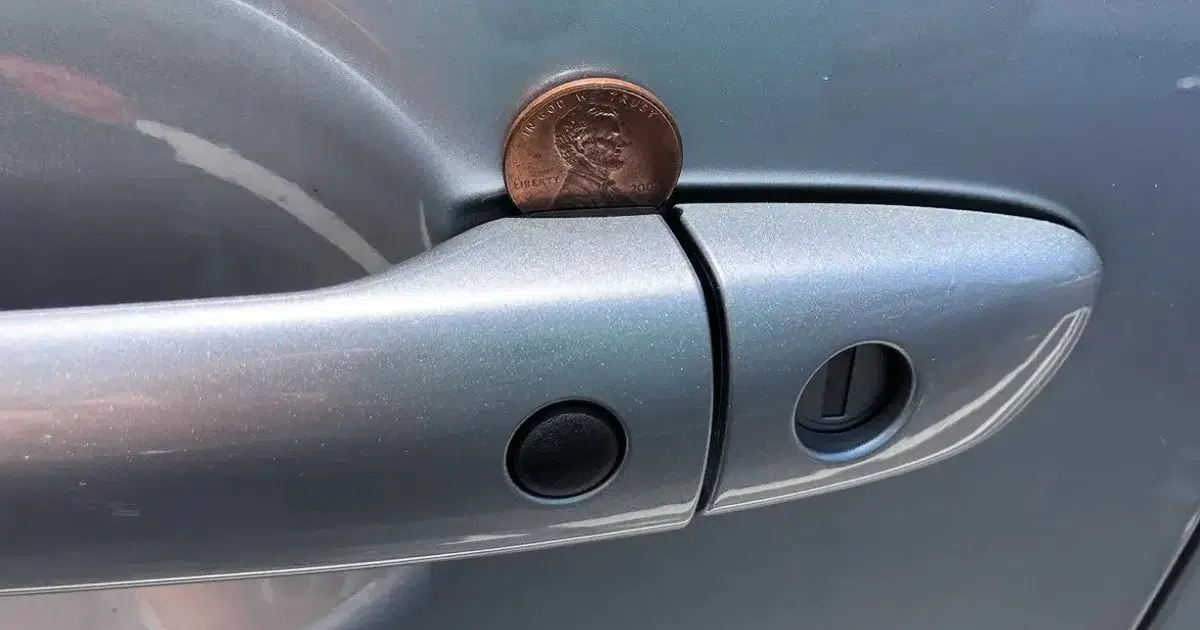
One explanation that gets shared a lot is the “penny trick,” a supposed car thief tactic involving a simple coin. (And to be fair, sometimes it’s not a theft attempt at all—your car could simply be having a normal lock or handle issue.)
Still, it’s worth knowing what people mean when they talk about this.
The “Penny Trick” People Warn About
The idea is that a thief slips a penny or nickel into the passenger-side door handle or around the mechanism. It sounds ridiculous, but the purpose is simple: mess with the door so the car doesn’t lock properly, or so the owner gets distracted trying to figure out what’s wrong.
Why the Passenger Side?
Most drivers approach and enter from the driver’s side. If something is placed on the passenger-side handle, you might not notice it right away.
In the story people tell, the coin can interfere with the locking mechanism (especially on vehicles that rely on central locking), making it harder to fully secure the car—or at least making it seem like the locks are malfunctioning.

The Bigger Concern: Distraction
The creepiest part of the legend isn’t the coin itself—it’s what’s supposed to happen next.
The claim is that while you’re distracted fighting with the lock, someone may be nearby watching. If you step away, set your keys down, leave a door unlocked, or get flustered and stop paying attention to your surroundings, that creates an opportunity.
Whether the goal is stealing the vehicle or grabbing valuables inside, the tactic relies on one thing: catching you off guard.
What to Do If You Find a Coin (or Any Sign of Tampering)
If your key won’t turn or something seems jammed, don’t panic. Do this instead:
- Check the passenger-side door handle. Look for anything wedged inside or around the handle—coins, plastic, debris, anything that doesn’t belong.
- Scan your surroundings. Trust your instincts. If you feel uneasy, don’t ignore that feeling.
- Don’t isolate yourself. If you’re in a quiet or dark area, move to a well-lit spot and call someone to stay on the phone with you or come outside.
- Avoid repeatedly fiddling with the door. If it won’t open and you suspect tampering, it’s okay to step back and reassess rather than staying focused on the lock.
- Call authorities if you believe someone attempted a break-in. If you see clear signs of tampering, it’s reasonable to contact local police/security—especially if you’re in a parking lot with cameras.
Extra Precautions That Always Help
Regardless of whether the coin story applies to your situation, these habits reduce your risk:
- Lock your vehicle every time, even for short stops
- Park in well-lit, higher-traffic areas when possible
- Keep valuables out of sight (bags, laptops, wallets, phones)
- Consider basic anti-theft deterrents like a steering wheel lock or alarm system
Is the Coin-in-the-Handle Trick Definitely Real?
Here’s the honest part: not everyone believes this is a proven, common method of car theft. Some people treat it as an urban legend or a rare scenario that got repeated online until it sounded widespread.
But even if the coin itself isn’t a guaranteed sign of a theft attempt, a foreign object on your car—or any unexpected issue with your lock—is a good reason to be alert and cautious.
The best takeaway isn’t “every coin means danger.” It’s: if something feels off with your car, stay aware, check your surroundings, and handle it safely.

