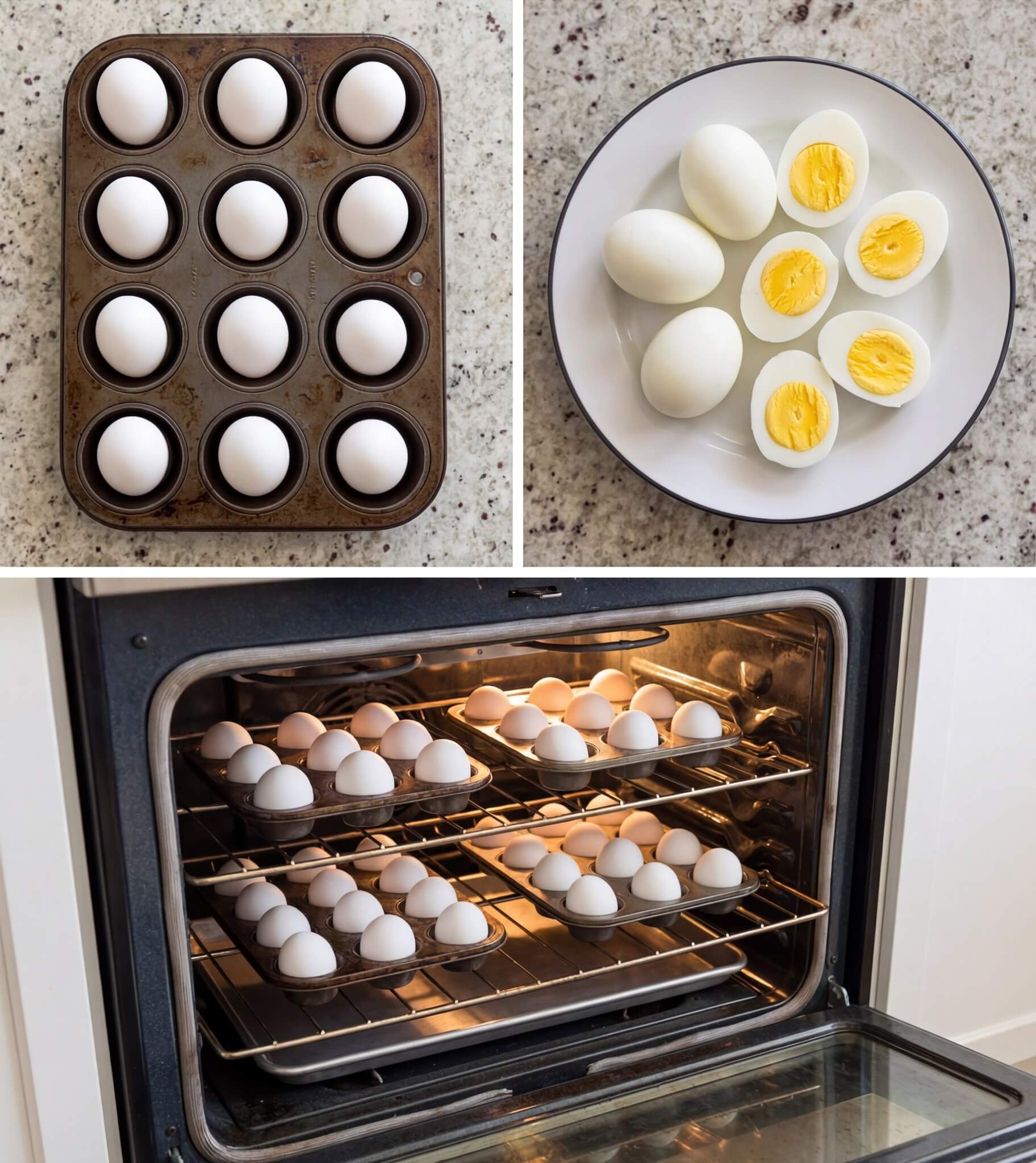
Baking hard-boiled eggs in the oven sounds strange, but it’s a surprisingly hands-off alternative to boiling. No overflowing pots, no hovering over timers, and no frantic peeling sessions while scrolling on your phone. This method lets the oven handle everything, making it especially appealing for meal prep or big batches like deviled eggs. It works, but results can vary depending on oven temperature and timing. The texture can be slightly firmer than boiled eggs, and overcooking may cause dry yolks. Still, it’s a convenient option worth trying if you love low-effort kitchen shortcuts.
Hard-Boiled Eggs in the Oven
Ingredients
| Ingredient | Quantity |
|---|---|
| Eggs | As many as needed |
| Ice water | Enough for an ice bath |
Instructions
Preheat your oven to 325°F–350°F, adjusting slightly based on how your oven runs.
Place eggs into a muffin tin to keep them from rolling. If needed, they can sit directly on the oven rack, but expect some wobbling.
Bake the eggs for 25–30 minutes.
While they bake, prepare a large bowl of ice water.
Once baked, immediately transfer eggs to the ice bath and let them cool for 5–10 minutes to stop cooking and improve peeling.
Peel and eat right away, or refrigerate. Whole eggs last up to seven days, while peeled eggs are best within three to four days.
Pros and Cons of Oven-Baked Eggs
Pros
No pot to monitor or risk of boiling over
Ideal for cooking large batches at once
Lower chance of cracked eggs during cooking
Some find peeling easier
Cons
Longer cook time than boiling
Results may vary based on oven heat
Possible brown spots on shells
Overcooking can cause rubbery whites
Do Oven Eggs Taste Different?
Slightly. Whites can be firmer and yolks drier if overcooked. The biggest risk is overheating, which can cause a greenish ring around the yolk. This discoloration is harmless and avoidable with proper timing.
Is Baking Better for Peeling?
Peeling depends more on egg freshness than cooking method. Older eggs peel more easily whether baked or boiled. Extra tricks like shaking eggs to loosen shells can help too.
Should You Try It?
Best for large batches: Oven
Best for speed: Boiling
Best for consistent texture: Boiling
Best for easy peeling: Depends on egg age
The oven method works and offers convenience, especially when cooking many eggs at once. But for speed and reliable texture, traditional boiling still wins.

