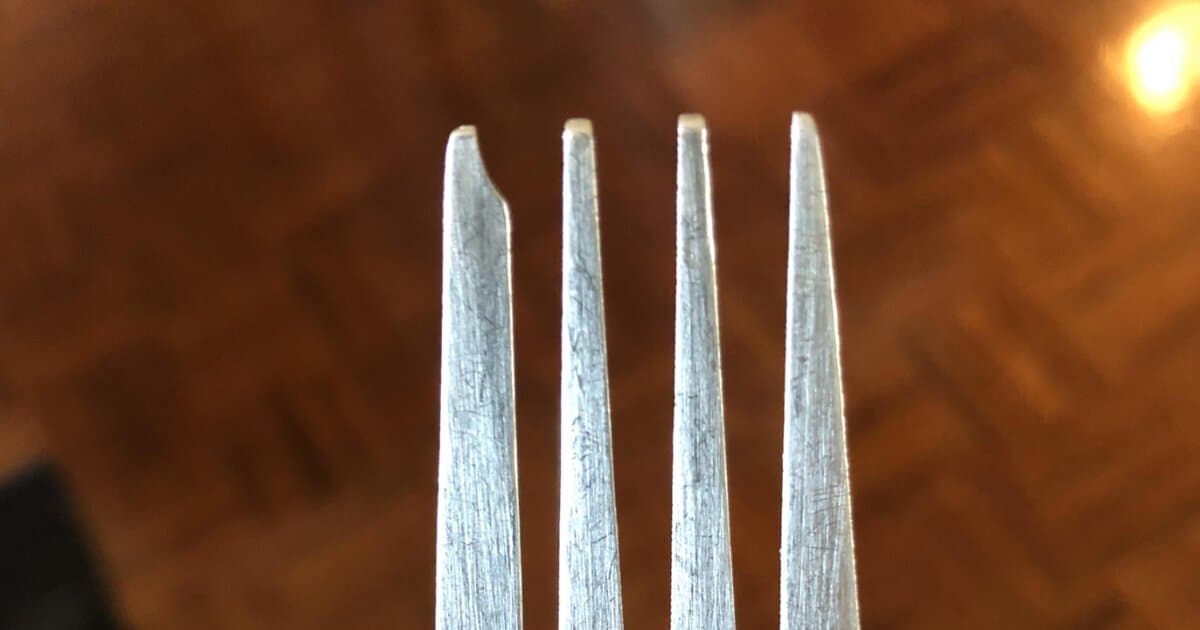
Have you ever pulled a fork from the drawer and noticed one prong looks… wrong? Like it’s been snapped off, filed down, or trimmed shorter than the rest?
At first glance, it’s easy to assume it’s a manufacturing defect or just years of wear. But if you’ve seen this on more than one fork—especially if they match—there’s a good chance it’s not accidental at all.
It’s intentional.
Meet the Cutting Fork
This style is often called a cutting fork. It’s designed with one tine that’s noticeably different—usually wider, sometimes slightly flattened, and often a little blunter at the tip.
That “clipped” look isn’t damage. It’s a built-in feature.
The goal is simple: make the fork do a little knife work, too.
What That Modified Tine Actually Does
The widened tine creates a subtle slicing edge that helps you cut through softer foods without switching utensils. Think:
- pasta
- soft-cooked vegetables
- tender fish
- delicate meat
- casseroles and other easy-to-separate foods
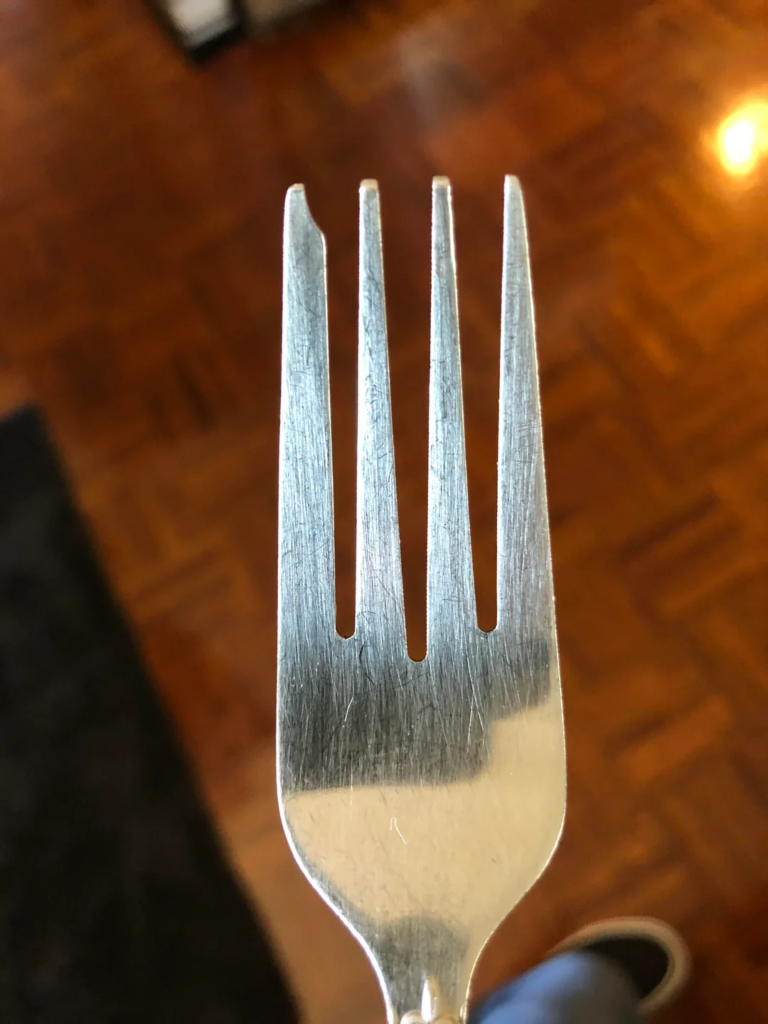
At the same time, the fork still functions like a normal fork because the other tines remain narrow and pointed for spearing.
And the blunted/shortened tip keeps that cutting edge from being dangerously sharp—so it stays practical for everyday use.
Why It Became Popular
Cutting forks fit right in with the mid-century love of “smart” kitchen solutions—tools that saved time and simplified casual meals.
Households leaned into convenience. Multifunction utensils were an easy win: fewer tools on the table, less fuss, and less need to reach for a knife when you didn’t really want one.
That’s why these forks often show up in vintage flatware sets and older “combo” utensil designs.
Small Detail, Big Ingenuity
So if you see a fork prong that looks like it’s been clipped within an inch of its life, don’t automatically toss it in the “bent and broken” pile.
It’s probably not broken.
It’s a cutting fork—a quiet little piece of practical design that’s been hiding in plain sight the whole time.

