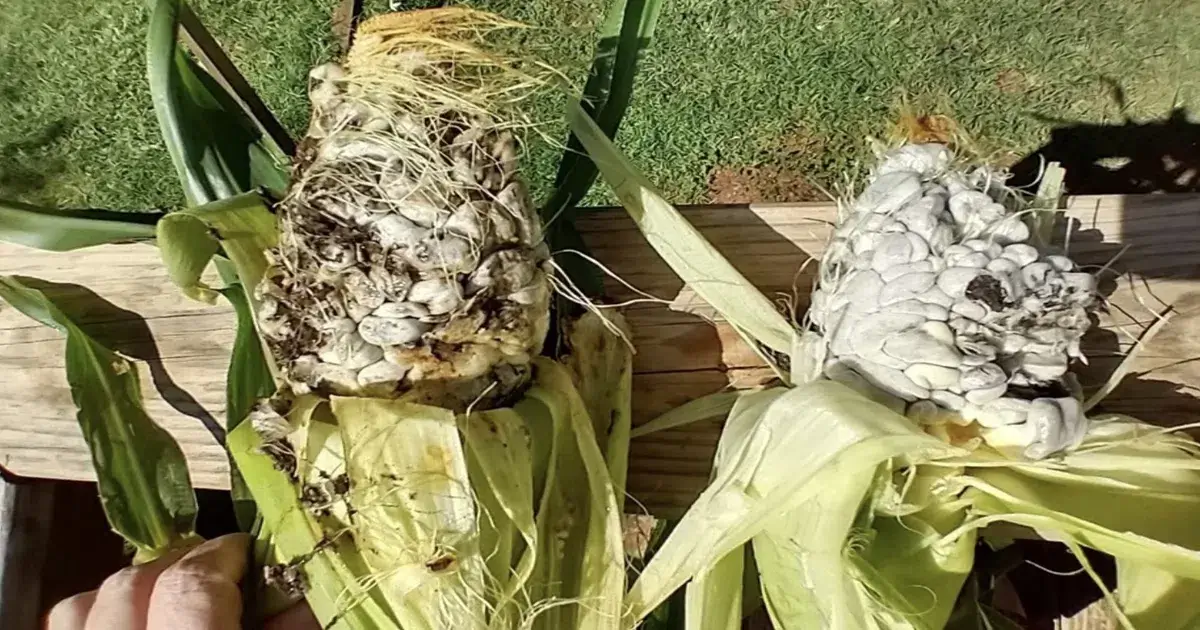
If you grow corn, you’ve probably noticed strange, lumpy growths forming on some ears. Many people post photos online asking, “Is my corn ruined?” The good news? The corn is usually just fine.
Those unusual lumps are called corn smut — a naturally occurring fungus that grows on corn kernels, causing them to swell into bulbous, irregular shapes. It’s not caused by chemicals, it isn’t toxic, and it doesn’t mean your corn is unsafe. In fact, in some parts of the world, corn smut is considered a prized delicacy.
Keep reading, because this has a surprisingly fascinating food story behind it.
What Is Corn Smut? (Ustilago maydis)
Corn smut is a fungal infection that affects corn plants. The fungus, known scientifically as Ustilago maydis, enters the corn and causes kernels to puff up into pale gray or whitish growths. As it matures, these swellings darken and eventually become black or charcoal-colored.
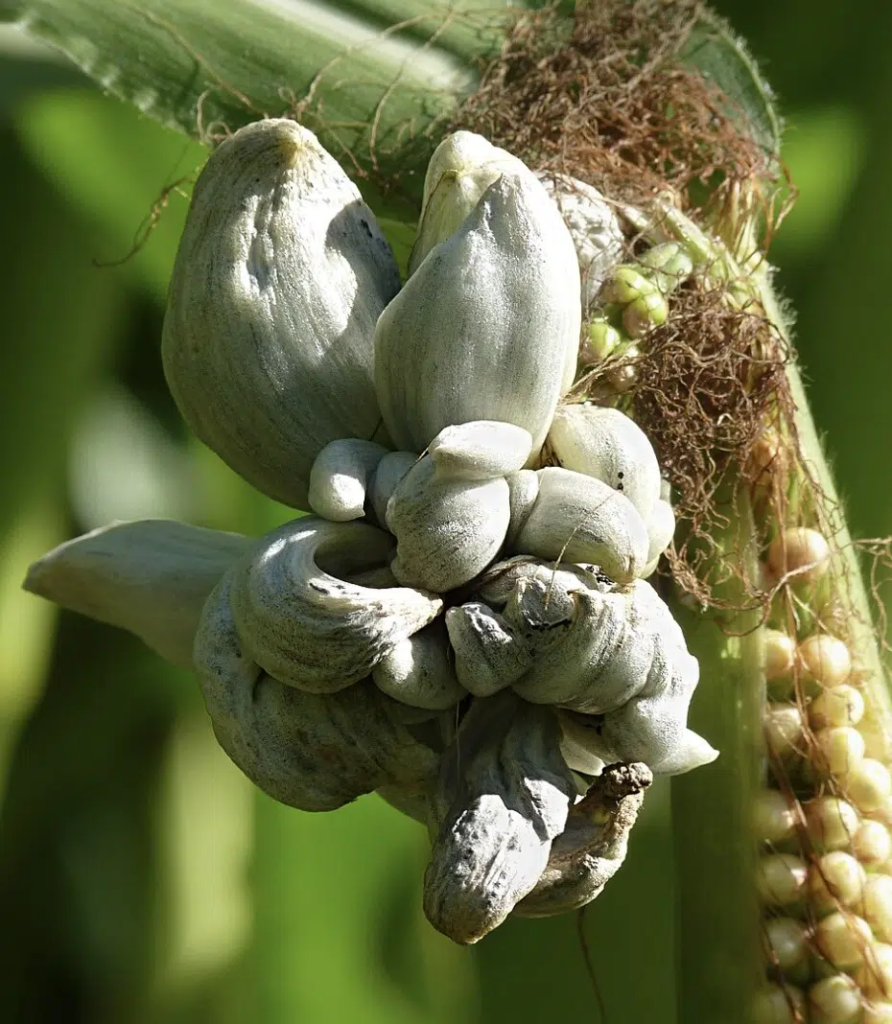
The fungus doesn’t only affect kernels — it can also form blister-like growths on the tassel and sometimes the stalk. The biggest visual clue is the transformation from normal smooth corn kernels into swollen, lumpy, darkened masses.
What makes Ustilago maydis especially interesting is that it thrives in many different environmental conditions. Unlike other molds that require strict environments, this fungus can survive and develop across a wide range of climates — making it a fascinating subject for plant science and agriculture.
How Does Corn Smut Form?
Corn smut develops when fungal spores are present and environmental conditions support infection. Warm, wet weather creates ideal conditions for spores to germinate. Corn plants are more likely to become infected if they’ve been physically damaged — whether from insects, hail, wind, or mechanical stress.
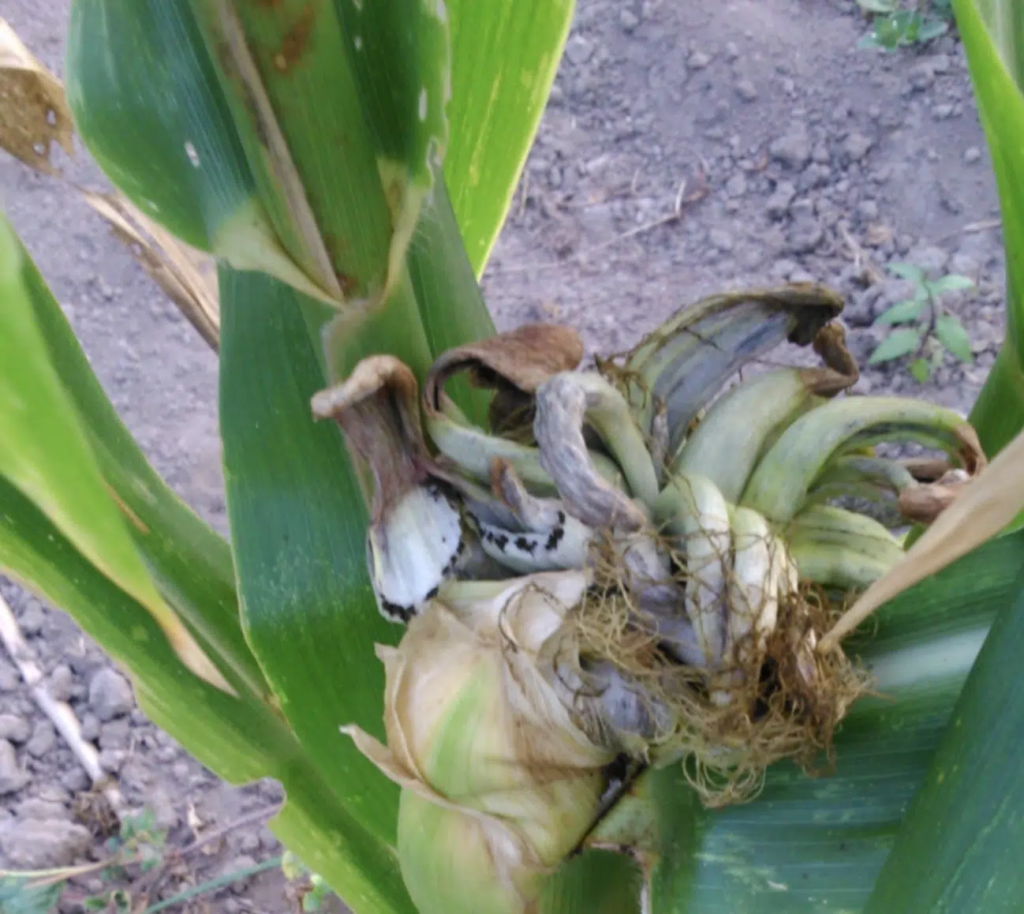
Once the plant tissue is compromised, the fungus gains entry and begins developing inside the kernels.
It’s important to understand that corn smut does not indicate poor farming practices or contaminated crops. It’s a natural occurrence and not a sign that the corn is unsafe or mishandled.
Can You Eat Corn Smut?
Yes — corn smut can be eaten, as long as it’s harvested at the right stage. When it’s firm, moist, and silvery-gray, it’s considered suitable for consumption. However, if it has dried out, started crumbling, or smells unpleasant, it should be discarded.
From a food safety standpoint, corn smut is not known to be toxic. Experts agree that when cooked using normal food preparation methods, it poses no health risk.
Whether to eat it is entirely a personal choice. If it makes you uncomfortable, there’s no reason to force it. But if you’re curious, just make sure it was harvested at the right time and cleaned properly before cooking.
Huitlacoche: The “Crop Disease” Turned Gourmet Ingredient
Here’s where things get exciting — corn smut is actually a beloved ingredient in Mexican cuisine, where it’s known as huitlacoche. The name comes from the Nahuatl language and roughly translates to “corn excrement,” which admittedly doesn’t sound appetizing. But the flavor tells a very different story.
Huitlacoche has an earthy, mushroom-like taste with subtle sweetness and smokiness. Its unique flavor makes it a standout ingredient in tacos, quesadillas, soups, and other traditional dishes. For many chefs and home cooks, it’s a culinary treasure.
While large-scale farming operations in the U.S. often treat corn smut as a crop problem, traditional cooks and food lovers see it as a gourmet opportunity. One person’s “spoiled crop” can easily be another person’s delicacy.
Why You Might See Corn Smut at Farmers Markets
If you spot corn smut at a farmers market, don’t assume it means poor quality. Many small growers embrace diversity in their harvests and intentionally sell huitlacoche to customers who appreciate it.
Sometimes farmers leave it on the ear simply because they don’t realize there’s demand — but either way, it has nothing to do with unsafe handling. Grocery stores often avoid carrying it because of its unusual appearance, which makes farmers markets the best place to find it.
What To Do If You Find Corn Smut on Fresh Corn
If you discover corn smut on freshly picked corn, don’t panic.
If it’s firm, moist, and odor-free, it may still be edible. If it’s dry, crumbly, or smells strong, discard it right away.
You can also ask the grower whether it was intentionally harvested as huitlacoche. If you’re feeling adventurous, there are plenty of recipes online for cooking it. If not, it’s perfectly fine to toss it — no judgment needed.
Once you understand what corn smut really is, it becomes far less alarming — and even intriguing. It’s a natural part of agriculture, unrelated to chemicals, and when harvested correctly, it can be both safe to eat and surprisingly delicious.

