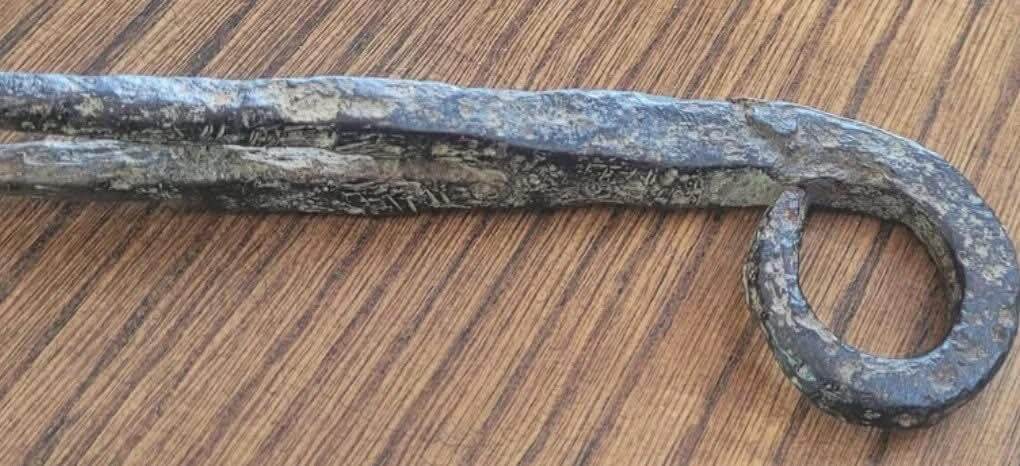
A peculiar antique iron tool from Appalachia has been sitting on a fireplace mantel in North Carolina for generations. No one in the family remembers a time when it wasn’t there. Measuring about 7 inches long and likely hand-forged, it looks like something crafted in a traditional blacksmith’s shop. One end has two worn, pointed prongs, while the other curves into a sturdy hook-like loop — simple, rugged, and built to last.
According to the current owner’s father, the tool once belonged to his grandmother, who lived past 100 years old and passed away in the early 1980s. Even when she was young, she claimed the tool was already old. While she never knew its original purpose, she regularly used it to dig potatoes from the ground — proof it was useful enough to keep for a lifetime.
So What Is This Thing?
When a photo of the tool was shared online, it became clear this mystery wasn’t unique. Others had seen similar tools, yet no one could agree on exactly what it was meant for. That’s not surprising, especially in Appalachian history, where tools were often handmade, repurposed, and adapted for multiple jobs.
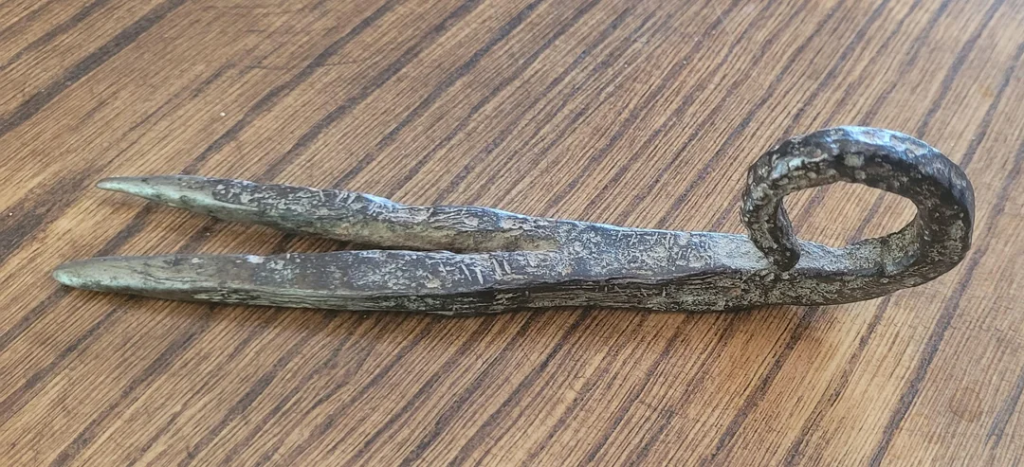
People offered several reasonable theories:
It may have been designed for digging potatoes, just as the great-grandmother used it.
Some suggested it worked as a nail puller for old wood or fencing.
Others believed the hooked end could tighten barbed wire.
A few thought it served as a hanging hook for lanterns or tools.
It might have helped with weeding or loosening soil in tight garden spaces.
One popular idea was that it functioned as a small pry bar for general use.
The most likely explanation is that a local blacksmith crafted this Appalachian iron tool from scrap metal — a common practice in the past. Instead of owning many specialized tools, people relied on one durable, multi-purpose piece that could handle countless tasks.
A Tool That Simply Worked
That practicality is what makes this mysterious iron tool so fascinating. It didn’t need branding, instructions, or a product label — it had value because it got the job done. Whether used on a farm, around fences, or in the garden, it earned its place through function and reliability.
Today, the tool no longer sees daily use, but it still holds meaning. It serves as a reminder of a time when people solved problems with creativity, reused materials, and built items to last for decades — not just until the next upgrade. No online reviews. No packaging. Just craftsmanship, intuition, and grit.
Even if no one ever discovers what this antique tool was originally “meant” for, its history remains alive. And honestly, if someone took it off the mantel and put it back to work today, it would probably still perform just as well as it did a century ago.

