Riddles have been entertaining and challenging people for centuries, combining fun with clever mental exercise. They’re not just word games — they sharpen thinking, spark curiosity, and often surprise us with unexpected answers. Some riddles seem simple at first glance, but hide a smart twist that makes you rethink everything.
One of the most popular examples is the “There’s a woman in a boat” riddle. It sounds straightforward, but the solution relies on a clever play on words that catches many people off guard.
Here’s the riddle:
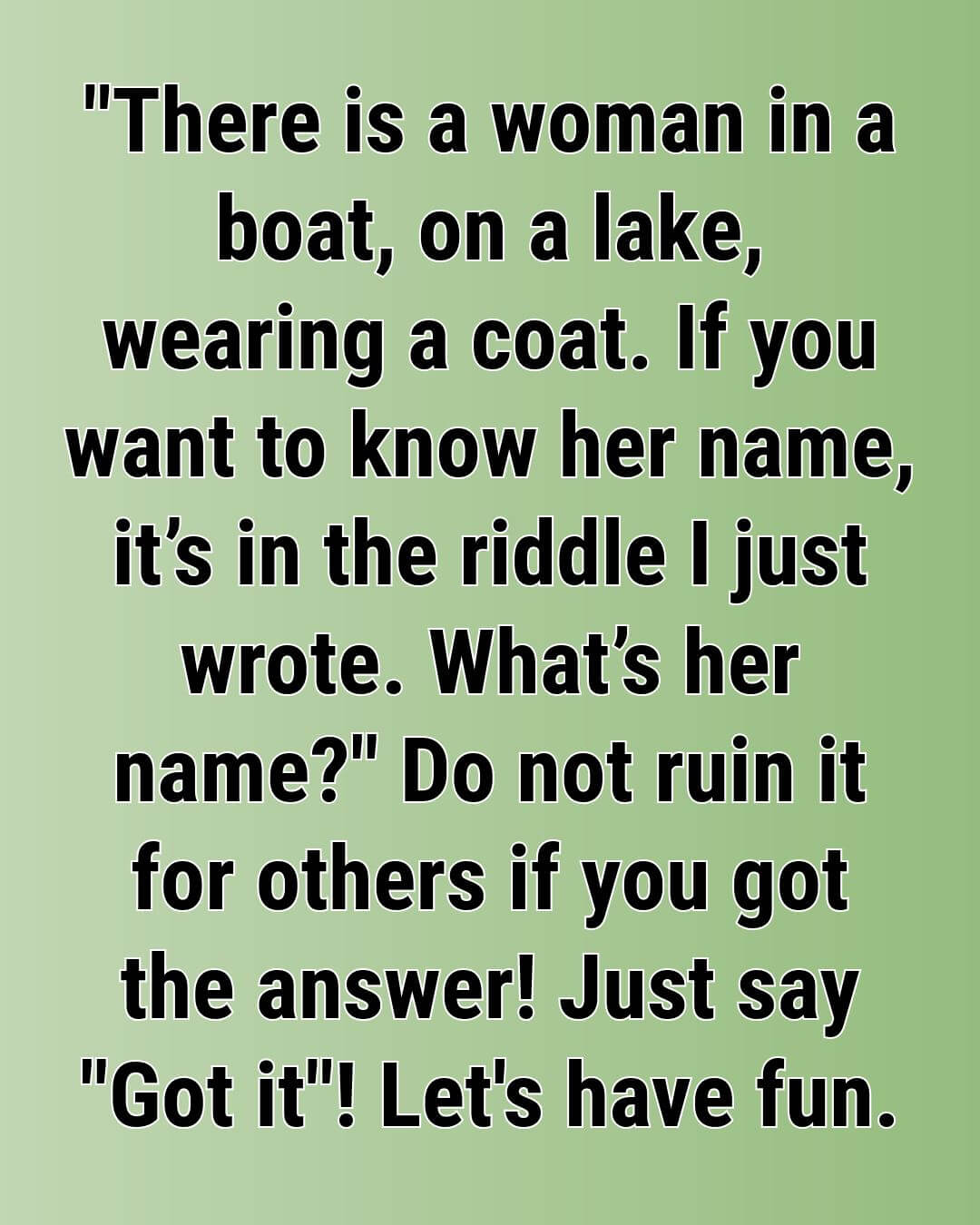
“There is a woman in a boat, on a lake, wearing a coat. If you want to know her name, it’s in the riddle I just wrote. What’s her name?”
Decoding the Clues
“There’s a woman in a boat, on a lake, wearing a coat.”
This opening line paints a clear picture — a woman sitting in a boat, floating on a lake, bundled up in a coat. These details feel descriptive, but they’re also carefully placed to guide you toward the answer.
“If you want to know her name, it’s in the riddle I just wrote.”
Here’s where the puzzle gets clever. The riddle tells you that the woman’s name is hidden inside the wording itself. Instead of looking for a traditional name like Anna or Sarah, the trick is to focus on the sentence structure.

The reveal? Her name is “There.”
Yes — the word “There” in the very first line is the answer. The riddle plays on expectations, making you assume the name is something typical, when in reality it’s hiding in plain sight.
This kind of wordplay is what makes riddles so entertaining. They highlight the flexibility of language and encourage creative thinking beyond obvious interpretations.
Riddles like this remind us to slow down, pay attention to phrasing, and enjoy the mental challenge. Next time you come across a tricky puzzle, take your time and look closely — the answer might be hiding right in front of you. And who knows? You might uncover another clever language trick waiting to surprise you.

