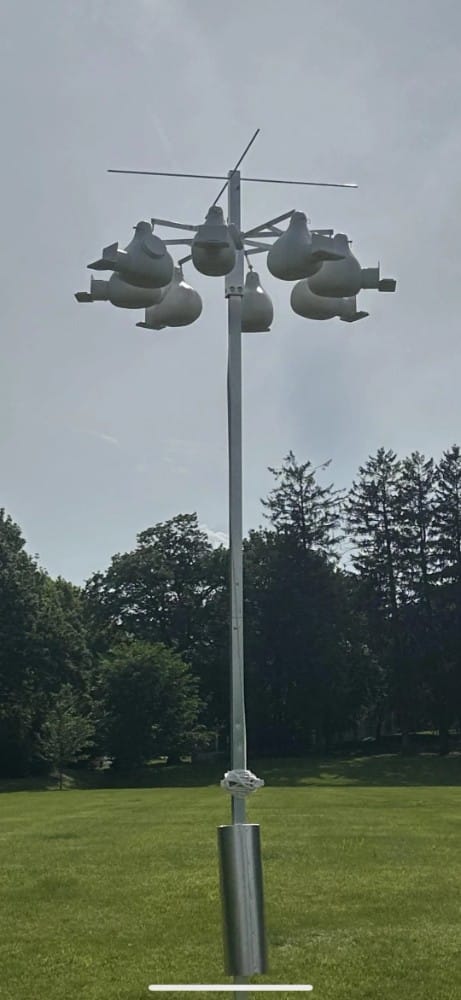
If you’ve ever strolled through a local park and noticed a tall pole topped with white, pod-like shapes, you’re not alone in doing a double take. At first glance, they look like cameras or strange weather devices. Rising more than 12 feet into the air, they definitely grab attention. But these structures aren’t spying on anyone. They’re actually purple martin gourd houses, thoughtfully installed to support one of North America’s most cherished migratory birds.
What Are Purple Martins?
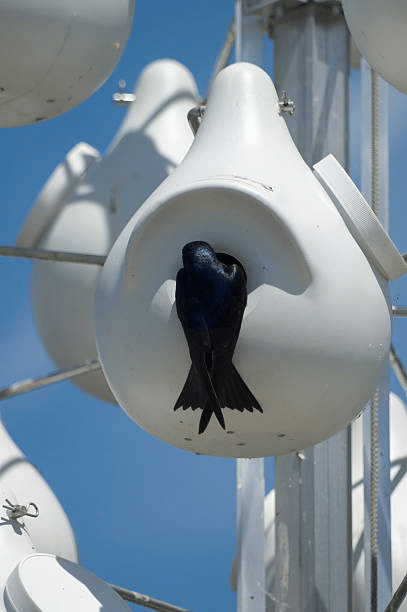
Purple martins are the largest members of the swallow family in North America. With sleek, dark feathers that shimmer blue in the sunlight and impressive midair maneuvers, they’re a favorite among bird watchers. These birds spend much of their time soaring through open skies, feeding on flying insects.
What makes purple martins unique is their reliance on people. In much of the eastern U.S., they depend almost entirely on human-provided nesting spaces because natural tree cavities are no longer common. This has led to a long-standing partnership between humans and martins, with dedicated caretakers—often called landlords—maintaining housing specifically for them.
Why the Gourd Shape?
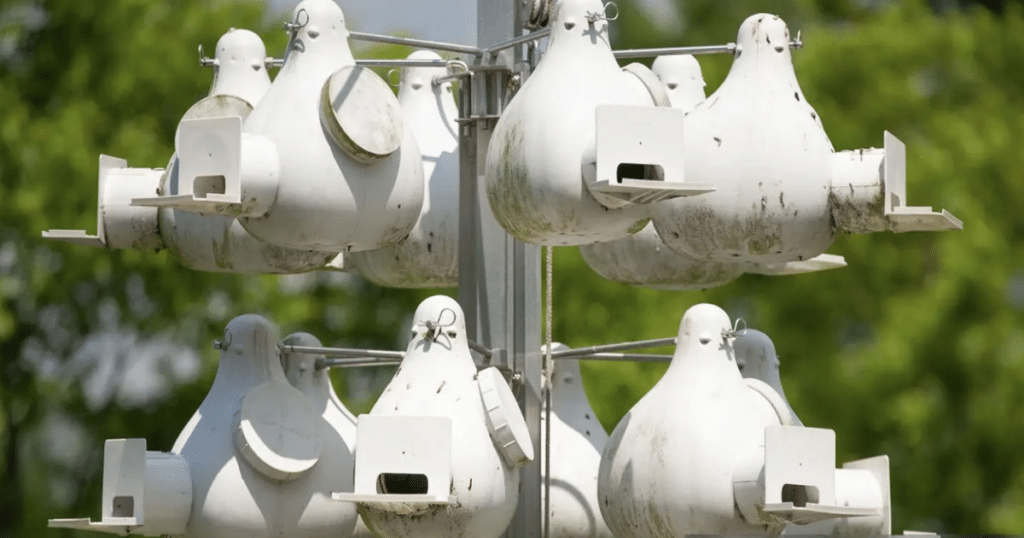
Those rounded white containers are modern takes on traditional gourd nests. Long ago, Native Americans and early settlers used hollowed gourds to attract martins, hanging them high off the ground. Today’s versions are made from sturdy plastic but still follow the same proven design.
Gourd-style houses offer generous space for nesting, added safety from predators when mounted high, and built-in ventilation and drainage to keep chicks healthy. They’re usually grouped together around a single pole, mimicking apartment-style living. Since purple martins are highly social birds, they prefer nesting close to others of their kind.
Why Are These in the Park?
Open parks are prime real estate for purple martins. These birds favor wide, unobstructed areas where they can easily spot danger and enjoy clear flight paths. Tall trees and heavy cover aren’t their style, which makes grassy park fields an ideal setting.
Installing purple martin housing helps support bird conservation, naturally reduce insect populations, and give visitors a chance to observe wildlife up close. In many areas, local groups even monitor these colonies, making adjustments to improve nesting success year after year.
What You’re Actually Seeing
If you take a closer look at the pole, you’ll likely notice several gourd-shaped chambers, each serving as an individual nest. Many setups include a pulley or telescoping system so caretakers can safely lower the gourds for cleaning and inspection. You may also spot a smooth metal section near the bottom of the pole—this acts as a predator guard, stopping snakes and raccoons from climbing up.
So the next time you spot one of these unusual poles, you’ll know the truth. They’re not high-tech gadgets—they’re carefully designed homes helping purple martins raise their next generation.

