
When you think of a traditional breakfast, items like crispy bacon, eggs, and toast probably come to mind. Then there’s that one mysterious item on some plates that sparks curiosity: black pudding. Half the table leans in to investigate, while the other half hesitates, unsure about it. But what exactly is black pudding, and why does it often raise eyebrows compared to a standard breakfast sausage?
The Main Ingredients
Let’s get straight to it: black pudding is a type of blood sausage. The primary ingredient, as the name suggests, is blood—usually from pigs, sometimes from cattle. It’s not fresh blood straight from the source; it’s dried, which preserves it and gives the sausage its dark, almost black color.

Along with blood, black pudding contains animal fat, often pork, for richness, and cereals like oatmeal or barley to bulk it out and give it texture. These grains provide substance and a satisfying mouthfeel, making the sausage more than just its bold main ingredient.
Seasoning and Flavor
A sausage isn’t complete without flavor, and black pudding is no exception. Classic recipes include a mix of spices and herbs such as nutmeg, cloves, and marjoram, sometimes even pennyroyal. Regional variations exist, so some versions are subtly aromatic while others have a stronger, more pungent taste. The seasoning transforms the basic mixture of blood, fat, and grains into a rich, savory component of a full English breakfast.
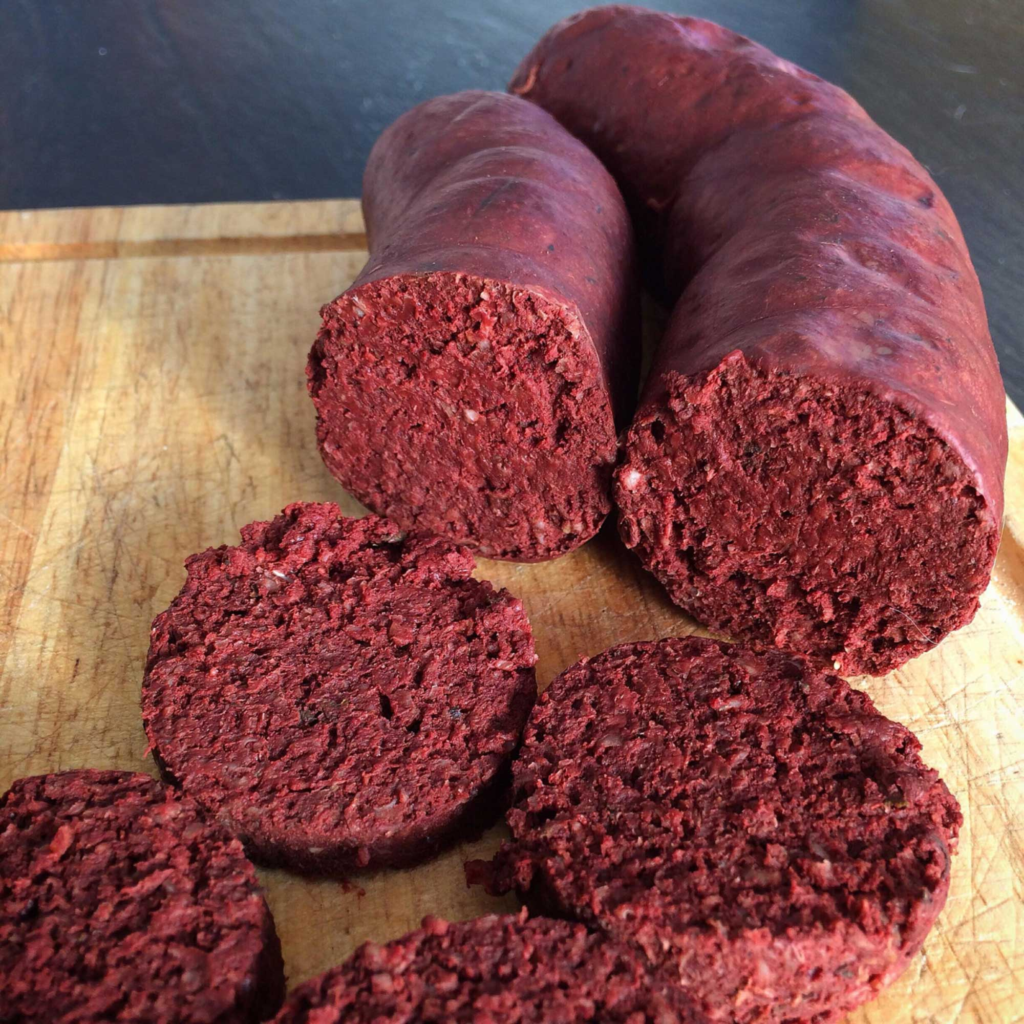
Natural Casings
Here’s a detail that surprises some people: black pudding is traditionally encased in natural casings, typically pig intestines. While that might sound off-putting, intestines have been used for centuries because they’re porous enough to allow steam to escape and strong enough to hold the sausage shape. This method is common for many types of sausages, including bratwurst, chorizo, and boudin.
A Dish With History
Black pudding has roots stretching back centuries. Ancient civilizations made blood sausages as a way to use every part of the animal—meat, blood, and all—mixed with grains and spices to maximize nutrition. Across the world, blood sausages have different names: morcilla in Spain, boudin noir in France, blutwurst in Germany. Black pudding is simply the British Isles’ take on this global tradition. Its survival isn’t due to scarcity but because it became a beloved regional comfort food.
Modern Variations
Today, black pudding is not just a breakfast item. Chefs often elevate it as a gourmet ingredient—crumbled over scallops, baked into pies, or reinvented as trendy canapés. Despite its rustic origins, black pudding has earned a place in fine dining for its flavor and texture.
More Than Shock Factor
While the idea of eating blood may turn some people off, black pudding isn’t meant to shock—it’s a product of resourcefulness and tradition. Its savory taste, nutty grain undertones, and aromatic spices make it a hearty, satisfying dish. Understanding its history and ingredients often changes perceptions from curiosity to appreciation.
Next time you see black pudding on a menu or breakfast plate, you’ll know the story behind it. It’s dried blood mixed with fat and grains, seasoned, and encased in natural casings—a centuries-old dish that has endured because it’s both practical and delicious.
Black pudding may surprise you, but it’s a perfect example of how traditional foods can be both mysterious and delicious, connecting history, culture, and flavor in one unforgettable bite.

