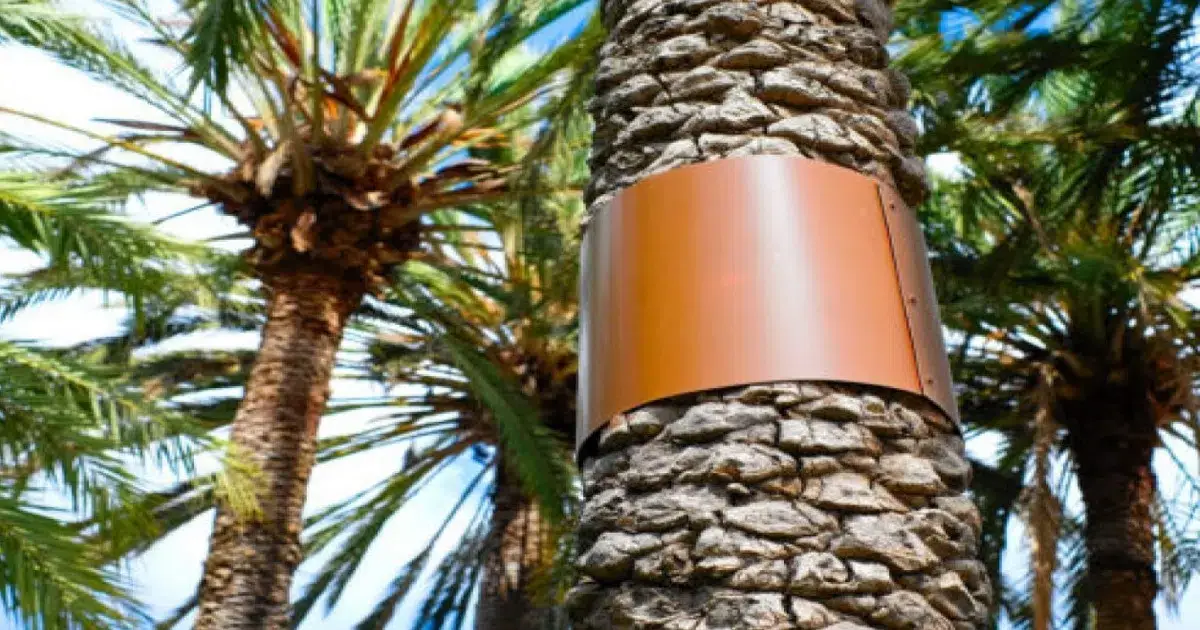
Have you ever been out for a casual walk—no rush, just enjoying the moment—when something unusual catches your eye? Maybe you spot a perfectly normal tree… except it has a shiny sheet of metal wrapped around its trunk. It can look a little strange, almost like the tree is wearing some kind of medical brace.
At first glance, it’s easy to assume the tree is being “repaired,” as if the metal is holding it together after some kind of injury. But the truth is far less dramatic—and much more practical. That metal isn’t for healing. It’s actually a clever form of protection.
Once you learn what it’s for, you’ll probably start noticing these metal wraps everywhere.
Not a Tree Cast—Think of It as Tree Armor
Many people assume these metal coverings are meant to fix damaged bark or support a weakened trunk. In reality, they serve as a defensive barrier against pests.
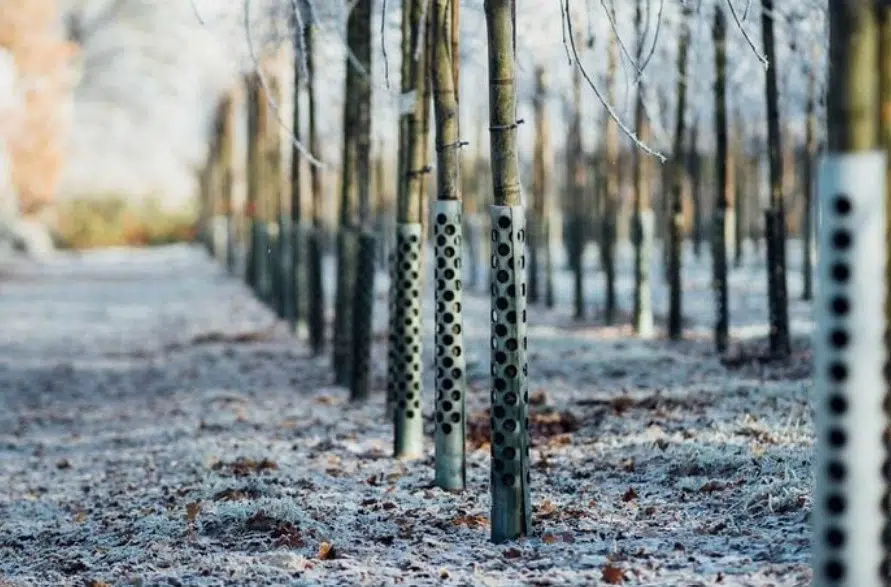
These devices, known as tree baffles, are designed to keep small animals like squirrels, raccoons, and rats from climbing up the trunk. While these creatures might seem harmless—or even adorable—they can cause significant problems for trees. They may strip bark, build nests in the branches, or use the tree as a launch point to reach rooftops and attics.
Tree baffles act like a simple yet effective shield, helping prevent these unwanted visitors from turning a tree into their personal playground.
How Tree Baffles Work
Tree baffles rely on a straightforward principle: smooth metal surfaces are difficult for animals to grip. The metal is typically installed with the slick side facing outward, making it nearly impossible for climbers to get traction.
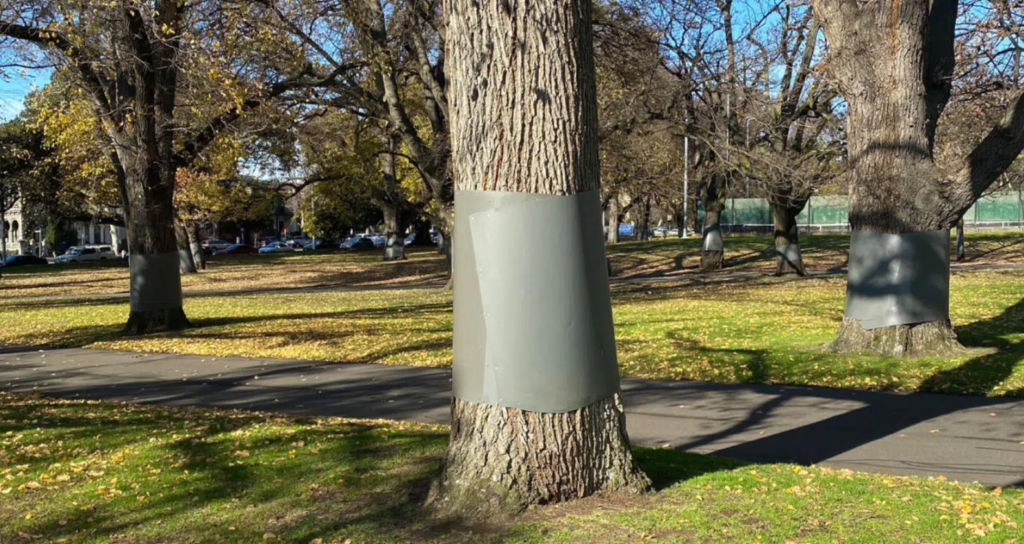
When an animal attempts to scale the trunk, it simply slides back down. There’s no need for complex technology—just smart use of basic physics.
Arborists and tree care professionals often recommend baffles because they protect trees without causing harm. They also provide a clean, minimal look that blends into the landscape once you understand their purpose.
Bands vs. Cones: Choosing the Right Type
There are two main styles of tree baffles, and the best option depends on the tree’s size and age.
Band baffles are wide strips of metal wrapped around the trunk like a belt. These are ideal for mature trees with thick trunks, such as older oaks or maples. They are usually secured with wire, screws, or nails, installed carefully to avoid damaging the tree. For best results, the metal should overlap slightly and be positioned at least five feet above the ground. If placed too low, agile animals may simply jump over the barrier.
One unexpected advantage? These metal bands can be painted. Homeowners often choose earthy tones to help the baffle blend into the tree’s natural appearance.
Cone baffles, on the other hand, are better suited for younger or thinner trees, including fruit trees. Shaped like upside-down funnels, they flare outward to block animals from climbing past them. Like band baffles, they come in various sizes and can be installed with basic hardware.
The Simple Physics Behind Their Success
The effectiveness of tree baffles comes down to one key factor: traction. Without a rough surface to grip, animals cannot climb. The smooth metal acts like a slippery slide, stopping pests from reaching branches where they might nest or cause damage.
This also prevents them from using trees as access points to nearby structures—something homeowners especially appreciate when trying to keep attics and roofs pest-free.
Can You Make a DIY Tree Baffle?
If you have a tree that attracts climbing animals, creating a homemade baffle is a doable project. A strip of aluminum or metal about 18 inches wide can be wrapped around the trunk and secured with wire, screws, or nails. Just remember to overlap the metal slightly and install it high enough to prevent animals from bypassing it.
Painting the metal is optional. Some people prefer to camouflage it to resemble bark, while others don’t mind the reflective look.
A Practical Solution—Not a Sign of Trouble
So the next time you notice a tree wearing what looks like metallic armor, there’s no need to worry. It’s not a sign that the tree is damaged or struggling. In fact, it’s quite the opposite—it means the tree is being protected.
Once you start paying attention, you may also notice other markings or additions on trees, such as painted dots or hanging bottles. Each has its own purpose, revealing that trees often carry subtle signals about how they’re cared for.
A metal wrap around a trunk might seem unusual at first, but it’s actually a smart, simple solution—and a surprisingly brilliant one.