The first time I sliced open a can of Spam and spotted little white chunks inside, I froze. They looked suspicious enough that I immediately wondered whether I had just opened a spoiled can. If you have ever seen white specks in canned meat and felt your stomach drop, you are definitely not alone.
The good news is that, in most cases, those white bits are completely normal.
What Spam Is Actually Made Of
To make sense of those white spots, it helps to know what goes into Spam in the first place. Spam is a pre-cooked canned meat made primarily from pork and ham. It also contains water, salt, modified potato starch, sugar, and sodium nitrite as a preservative.
Because it is made from pork, Spam naturally includes some fat along with the lean meat. That fat is not some mystery filler. It helps give Spam its texture, moisture, and rich flavor. Without it, the meat would be much drier and far less appealing.
The meat is ground, mixed with the other ingredients, packed into cans, sealed, and then cooked inside the can. That sealed cooking process is a big part of what makes it shelf-stable and safe for long-term storage.
So What Are the White Chunks?
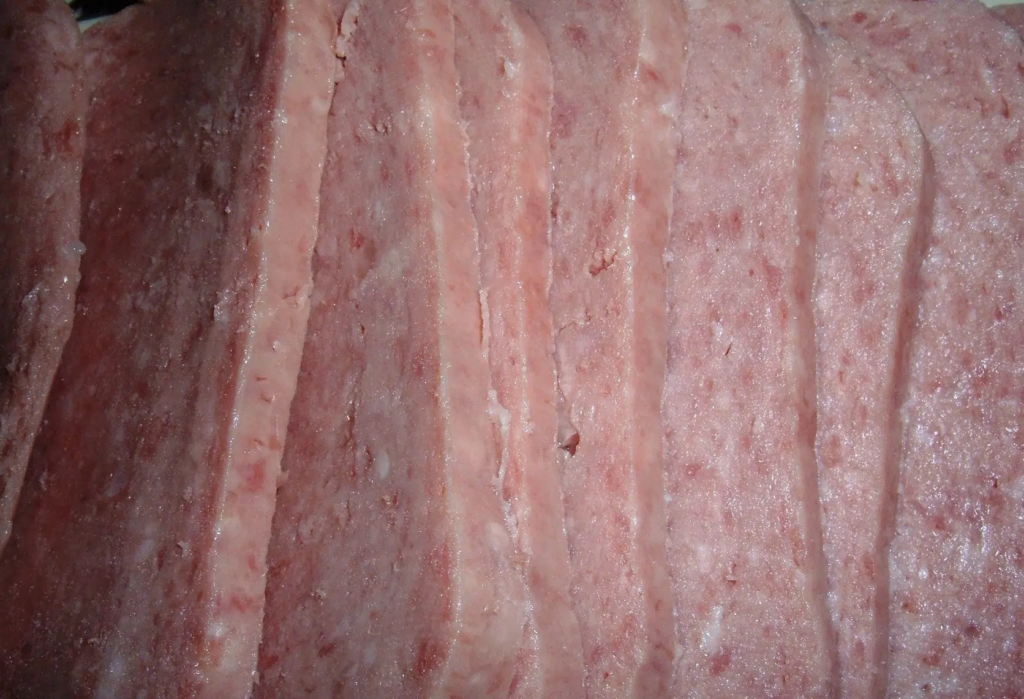
Those white bits are usually just solidified pork fat. In some cases, they may also include tiny bits of connective tissue, which is also normal in processed meats.
When pork fat is cold, it turns white or off-white and becomes firmer. That is why those bits can stand out even more if the can has been stored somewhere cool or chilled in the refrigerator.
One thing that makes this less alarming is how evenly those white pieces are usually spread throughout the meat. That kind of uniform pattern points to fat being part of the product itself, not some outside contamination.
Is It Mold or Just Fat?
This is the big question most people ask the moment they see those pale spots.
In most cases, it is just fat.
Fat in Spam tends to look smooth, pale, and blended into the meat. It does not usually sit on the surface in a strange patch, and it should not come with a bad smell. A normal can of Spam will smell salty and meaty when opened, not sour or rotten.
Mold looks very different. It is often fuzzy, powdery, or patchy, and it usually appears on the surface rather than evenly mixed throughout the product. Mold also tends to show up in colors like green, blue, gray, or black. And if something smells sharply sour or clearly off, that is a much more serious sign than the appearance of white fat.
Because Spam is heat-processed and sealed, mold inside an undamaged can is very uncommon.
When You Should Throw It Away
Even though the white bits are usually harmless, there are still times when you should not take chances. Toss the Spam if you notice any of these warning signs:
- A bulging or misshapen can
- Leaking before opening
- Heavy rust or severe dents along the seams
- A sour, rotten, or unusual smell after opening
- Sliminess or odd discoloration
If any of those show up, it is better to throw it out than risk it. With canned foods, the condition of the can and the smell of the contents matter much more than a few white bits.
Why the White Bits Seem to Disappear When You Cook It
If you fry Spam, you may notice those white chunks seem to melt away. That is another clue that they are simply fat.
When cold, pork fat is solid and white. Once heated, it melts into a clear or translucent liquid. As it cooks, that fat blends into the meat, helping create the juicy texture and crispy edges that people love about fried Spam.
So if those white spots vanish in the pan, that is exactly what you would expect fat to do.
No Need to Panic
Seeing white specks in Spam can be a little unsettling the first time, especially if you are worried about mold or contamination. But in normal circumstances, those bits are just solidified fat doing what fat naturally does.
Check the can. Smell the product. Look for anything truly unusual. If everything seems normal aside from those pale spots, there is usually no reason to worry.
Once you know what you are looking at, it becomes a lot less alarming. Those white bits are not some mystery ingredient. They are simply part of the meat—and part of what gives Spam its texture and flavor.