Picture yourself beside a fast-moving stream in the early 1800s. You’ve had a great day fishing—but there’s one problem: no cooler, no ice chest, no fridge waiting at home. If you wanted your catch to stay fresh (and ideally alive), you had to get creative.
That’s where this oddly charming antique device comes in.
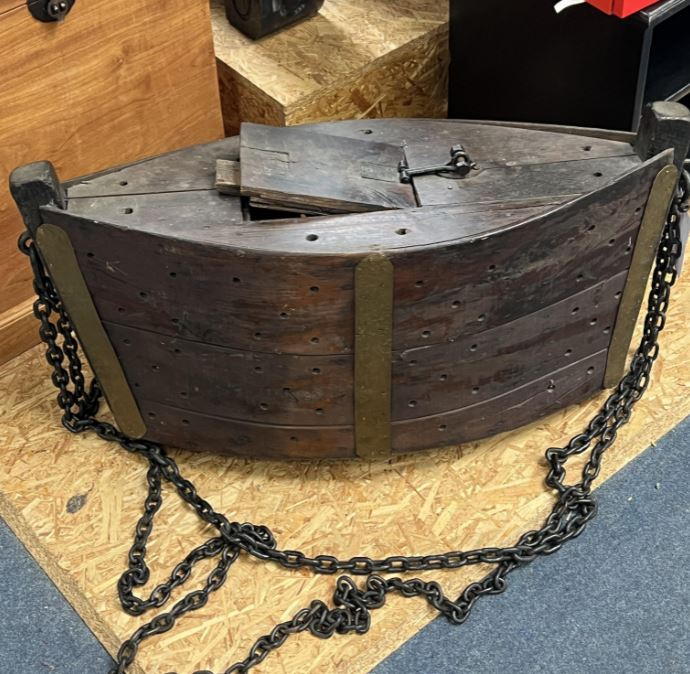
What you’re looking at is an old-fashioned fish holding container, built to sit right in running water so the river could do the refrigeration for you.
What This Antique Apparatus Actually Is
This semi-circular wooden container—reinforced with iron bands and fitted with heavy chains—was designed for one job: keeping caught fish alive and fresh in a stream until the fisherman was ready to collect them.
Think of it as a portable, low-tech “livewell” long before modern boats and coolers existed.
Why the Design Looks the Way It Does
At first glance, it’s simple… but it’s smart.
The curved wooden slats are bound together with metal braces, and the body includes small openings that allow water to pass through. That steady flow matters because it means:
- fresh, oxygen-rich water keeps circulating
- fish don’t suffocate
- spoilage slows down dramatically
In other words, the fish stay in the closest thing possible to their natural environment—even while being “stored.”
The Chains Weren’t Decorative
Those heavy iron chains attached to the sides had a practical purpose: anchoring the container to the streambed so it wouldn’t drift away in the current.
A fisherman could secure it in a safe spot in the river, drop fish in as the day went on, and keep fishing without having to rush home or risk losing the catch to heat and time.
The Lid, Latch, and Lock: Protection and Convenience
The hinged lid—often secured with a latch or lock mechanism—served two key roles:
- Protection: keeping the fish from being snatched by opportunistic animals
- Access: making it easy to open, add fish, and retrieve them later
It was basically a little “mini fishery” sitting in the current, working quietly while the fisherman went about his day.
Why This Tool Mattered So Much Back Then
This kind of gear comes from a time when fishing wasn’t just a hobby—it was survival.
For many communities near rivers and lakes, fish was food and trade. But getting the catch home could take hours or even days, and without refrigeration, spoilage was a real threat. Running water became nature’s refrigerator, and devices like this were essential.
Built to Last Like a Lifeline
Looking at the construction, it’s clear this wasn’t made to be flimsy.
Hardwood slats helped resist constant wet conditions, and the iron braces and chains added strength against both current and weight. Tools like this weren’t just useful—they were valuable enough to be kept, repaired, and passed down.
A Small Relic That Says a Lot
Today, it’s easy to forget how recently refrigeration became normal. That’s why this artifact feels so intriguing: it shows how people once relied directly on the environment, using practical design instead of electricity and plastic.
So the “secret” behind this mysterious antique device is actually beautifully straightforward: it used the river itself to keep fish alive and fresh—long before coolers made it easy.

