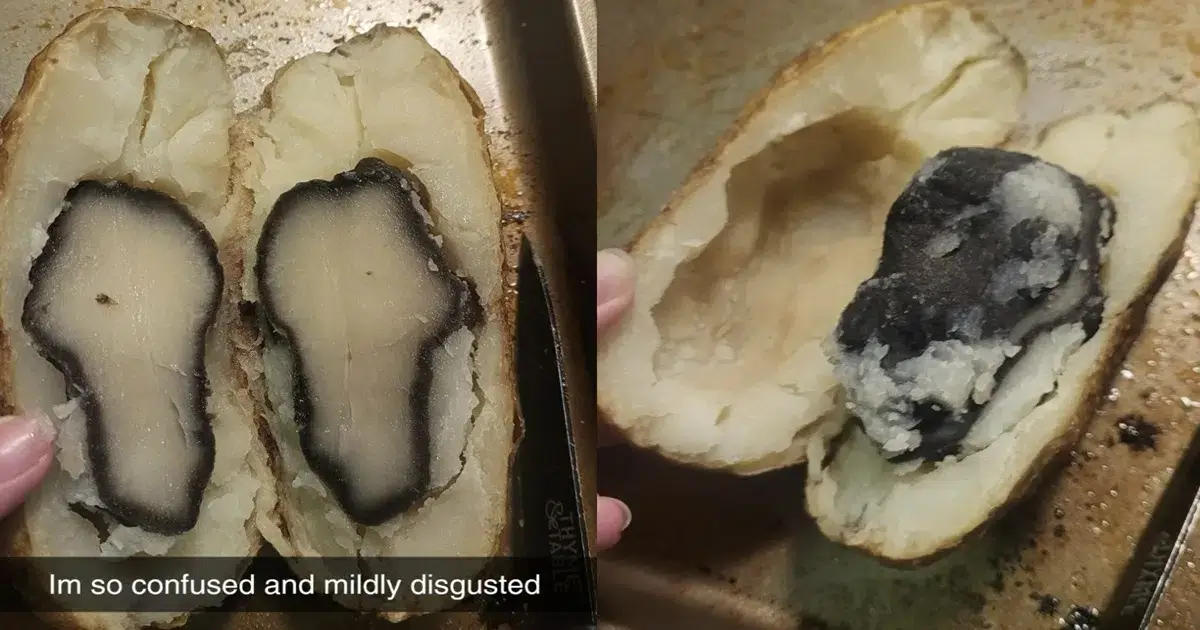
You bake a perfectly normal-looking potato, slice it open… and bam—there it is. A dark, creepy-looking ring inside the middle of the potato like it’s trying to summon a kitchen demon.
If you’ve ever seen this, your first thought is usually: Is this mold? Is it rotten? Did I just cook a science project?
Good news: most of the time, it’s far less dramatic than it looks.
What Is the Black Ring Inside My Potato?
That grayish-black ring (or dark patches) inside a potato is most commonly internal black spot, also called internal bruising.
It’s a really common issue, especially when potatoes have been handled roughly or stored under less-than-ideal conditions. The key thing is that it’s usually:
- dark brown to black (sometimes slightly purple)
- firm and smooth (not fuzzy or slimy)
- often hidden with no outside damage at all
So yes—it can look alarming, but it’s often just a bruise you can’t see until you cut into it.
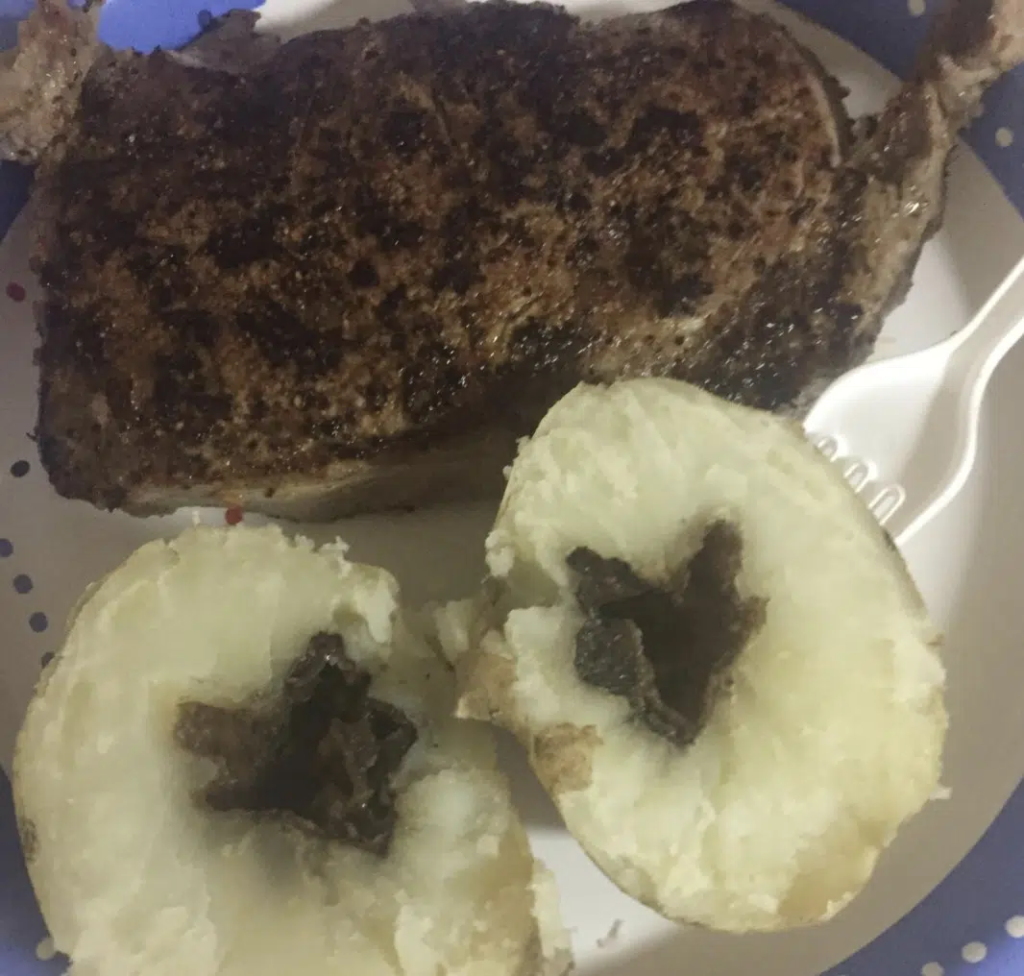
Why Does My Potato Have a Black Ring Inside?
A few things can cause that internal ring or spotting, and most don’t mean the potato is “bad.”
1) Pressure Damage From Handling or Storage
This is the most common reason.
Potatoes bruise easily even though they seem tough. If they’re stacked too tightly, dropped, or bumped around during shipping, they can develop internal pressure bruises without showing dents on the skin.
It’s sneaky—you won’t know until you slice.
2) Low Oxygen Inside the Potato
Sometimes the issue is tied to oxygen availability.
People often confuse internal bruising with blackheart, a different condition where the potato’s center turns dark due to lack of oxygen. Blackheart tends to be more severe and concentrated in the middle, while internal black spot often shows up as rings or scattered patches.
3) Temperature Stress
Potatoes don’t love extreme temperature swings.
Storing them too cold (like in the fridge) or letting them bounce between warm and cold conditions can affect their internal chemistry and create discoloration—even if the outside still looks fine.
4) Oxidation of Natural Vascular Tissue
Sometimes what you’re seeing is the potato’s natural internal “veins” (vascular tissue) darkening over time. These structures can oxidize and look more pronounced, especially after cutting or cooking.
How Do I Know It’s Not Mold?
Totally fair question—nobody wants to accidentally eat mold.
Here’s how internal bruising usually differs:
- Bruising is firm and smooth (no fuzz, slime, or weird growth)
- No strong sour or musty smell
- Often follows the potato’s internal pattern (rings/veins), rather than random fuzzy patches
Mold tends to look irregular, fuzzy, or slimy and usually smells “off.”
Is It Safe to Eat?
Most of the time, yes. Internal black spot isn’t toxic.
That said, the dark areas can taste a bit bitter or feel slightly dry, so most people just cut those parts out and eat the rest.
Toss the potato if:
- it smells sour or “off”
- it feels soft, wet, or slimy
- you see actual mold
- the skin is green (green can mean solanine, a natural toxin)
How to Avoid Potatoes With Black Rings
You can’t prevent it 100%, but you can lower the odds.
1) Give them a quick squeeze at the store
Avoid potatoes that feel soft, dented, or bruised.
2) Store them correctly at home
Keep potatoes in a cool, dark, well-ventilated place (like a pantry). A paper bag works well. Skip the refrigerator if you can.
3) Buy from high-turnover stores
Places that restock produce often usually have potatoes that haven’t sat around as long.
Black Spot vs. Blackheart vs. Rot
To make it simple:
- Internal black spot: firm potato, dark patches/rings (usually bruising)
- Blackheart: center turns dark from low oxygen, often more centralized
- Rot/mold: soft, slimy, foul-smelling, or fuzzy = throw it out
The Takeaway
If you find a black ring inside your potato, don’t panic. It’s usually just a hidden bruise from the potato’s bumpy journey to your kitchen.
Cut out the dark section, do a quick smell-and-texture check, and you’ll usually be good to go.

